
Coast - Skegness to Berwick-Upon-Tweed
This section of the coastal tour takes in the coastline from Skegness through to the Scottish border at Berwick. There are many resorts like Skegness, Scarborough and Bridlington, as well as secluded ports and plenty of nature reserves.
Not forgetting mystical places like Holy Island.
Prices quoted are correct as of May 2026
Not forgetting mystical places like Holy Island.
Prices quoted are correct as of May 2026
Previous: Deal - Boston Next: Eyemouth - John O'Groats
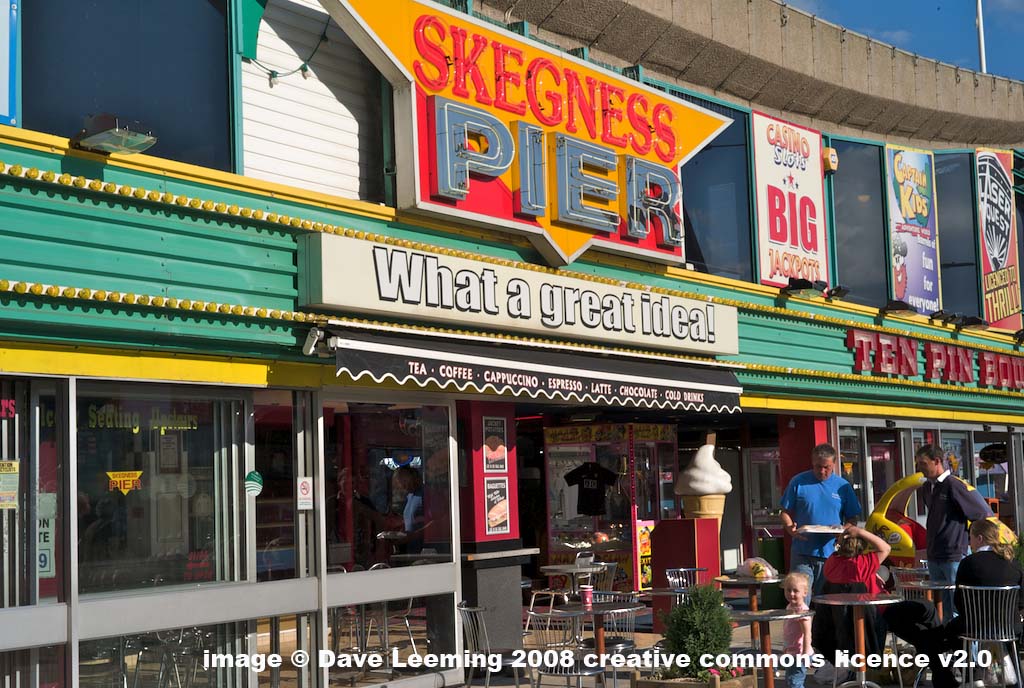 Skegness is a growing resort, in more ways than one, as it's six mile stretch of sandy beach gets bigger with a receding sea. Skeggy as it's known by the locals is another product of the Victorian obsession with the sea and the growth of resort coincided with the arrival of the railway, bringing hoards of visitors from the Midlands. Gardens abound and the usual collection of amusement arcades, funfairs and lidos can be found. Church Farm Museum show how farming was in Victorian times before the advent if the internal combustion engine. Just south of the town is Gibraltar Point Nature Reserve containing a large variety of habitats. Just north of Skegness is the site where Billy Butlin opened his first holiday camp in 1936 and it's still going strong.
Although Mablethorpe has amusement arcades and a funfair it is a much more genteel resort than many and its long sandy beach is popular. To the north of the town is The Animal Gardens And Seal Trust who care for injured seals. Open February - November. Admission Adult £15.00, Seniors £14.00, Children £11.00. The Old Curiosity Museum is one of those irresistible places with thousands of everyday items on display. The original town of Mablethorp was washed away in 1289 and when there is an extreme spring tide the original shoreline and tree stumps can be seen.
Cleethorpes is the third of the large resorts on the Lincolnshire coast and another that owes its popularity to the railway, indeed it is only a short step from your train carriage to the promenade. The sea goes out for over a mile but walkers need to be careful as the tide can come in very quickly. So shallow is the beach bathers can walk out 70 yards at high tide and still only be waist deep in the water. South of the resort is the Lakeside Leisure Area with fishing and wildfowl. A light railway runs through the park running to a theme park.
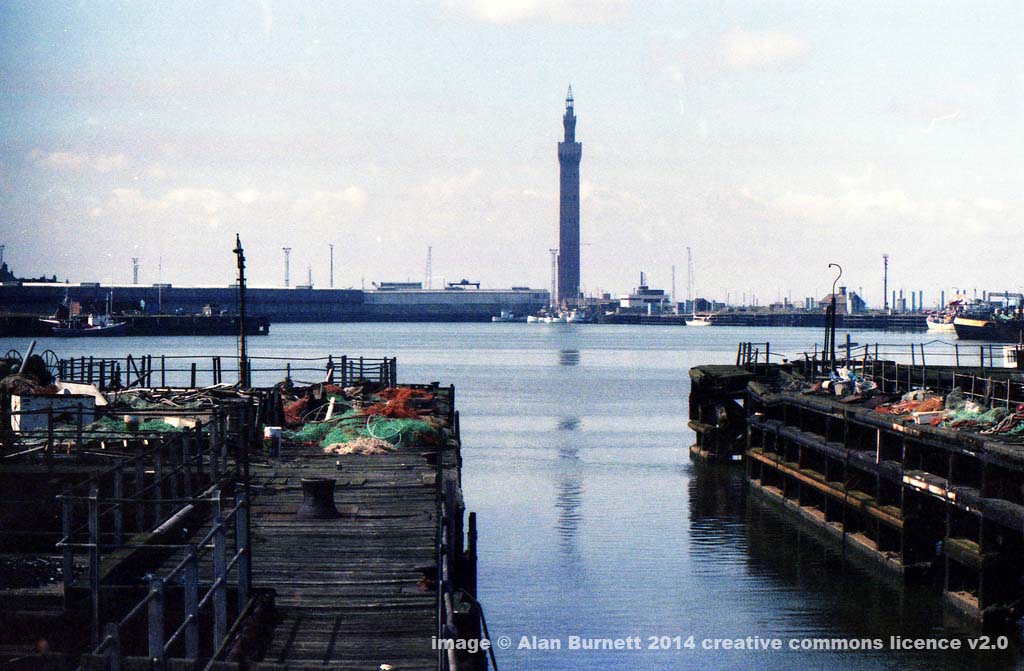 Cleethorpes is, to all extents and purposes, an extension of Grimsby. Grimsby was one of the great fishing ports but the deep sea fishing fleet has now gone but there is still a large commercial dock. The National Fishing Heritage Centre tells the story of the port and its fishermen. For the seaside you need to go to Cleethorpes but Grimsby has plenty of green spaces and parks.
Immingham is a commercial port but is not open to visitors. The towns claim to fame is it was the original starting point for the Pilgrim Fathers as they set off to America and a monument stands outside the parish church.
Barton-upon-Humber is a nicely preserved Georgian town and worth a stroll round, however it is better known for being one end of the magnificent Humber Bridge. The bridge is tolled for motor vehicles but pedestrians and cyclists can cross for free and it offers some stunning views - as long as you have a head for heights.
Hull or, to give the town its formal name, Kingston Upon Hull is a major port and commercial centre. Clearly the people of Hull are blessed with a great sense of humour, as there is no other explanation sane explanation for them returning the lampoonable, champagne socialist, John Prescot as their MP for 40 years.
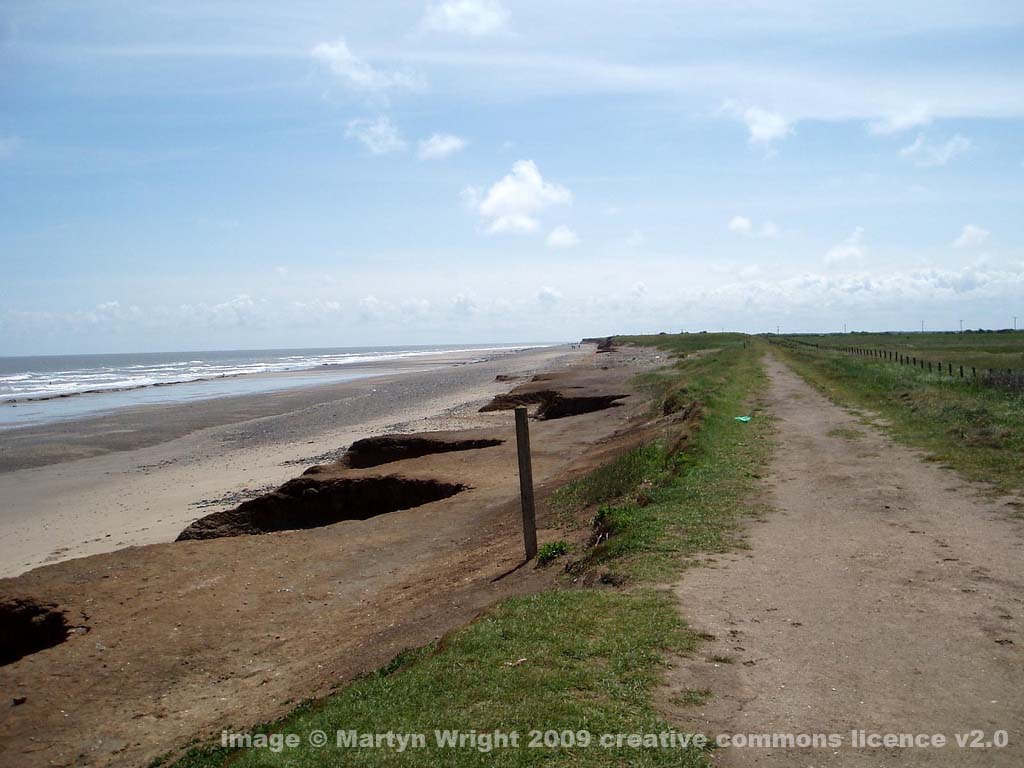 Spurn Head is a peninsular three miles lung and a mere 30ft (9m) wide with a sandy beach on the seaward side and mudflats on the estuary side. Now a nature reserve and a Heritage Coast it is great for viewing bird migrations as well as watching seals and porpoises. There is a charge to drive along the spit and dogs are not allowed, not even inside cars. At the end of the spit are some cottages which house the only full-time Lifeboat crew in the country. There is also a jetty which is used by the Humber Pilots.
Easington is a town of contrasts as to the north is a large industrial complex including a North Sea gas terminal. This has proved controversial as cliff erosion has increased considerably since the opening of the terminal. The old town consists of houses built from sea cobbles in various natural colours. The town also has a medieval church and a 15th century thatched barn.
Withernsea has a long sandy beach but its main attraction is its 1892 lighthouse, now a museum depicting the life of the RNLI and Coastguard.
The old town of Hornsea has cobbled cottages. The town also boasts a Freeport Shopping Outlet Centre but when visited in 2013 almost half the unit were empty. Hornsea Mere, an RSPB site, is Yorkshire's largest freshwater lake and a reserve of international significance.
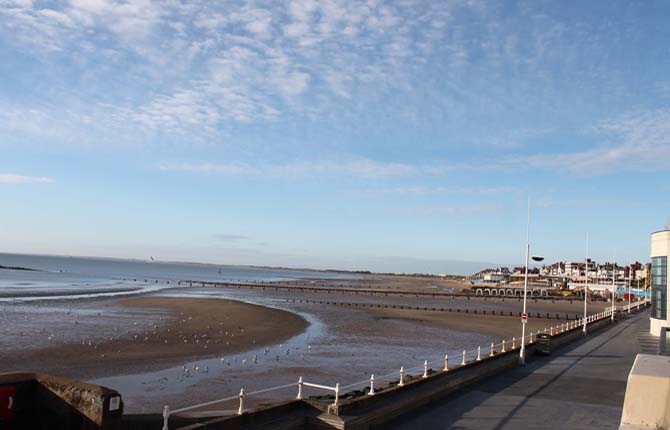 Bridlington has two, one mile long, beaches separated by a harbour which is still a busy fishing port. Fishing trips can be arranges as well as cruises to see the bird colonies at Flamborough Head.
Flamborough Head is a chalk headland and home to many birds and if you don't fancy the cruise from Bridlington to view the biers then teh cliffs are open to walkers. Flamborough village itself is a pretty location with a village street of fishermen's cottages and a small market.
Filey is one of those resorts which will suit most people. With a six mile long beach, the southern end of which is quiet quiet and unspoiled, whilst the northern end has the amusement arcades and other associated paraphernalia. A mile long promontory called Filey Brigg has hides for birdwatchers.
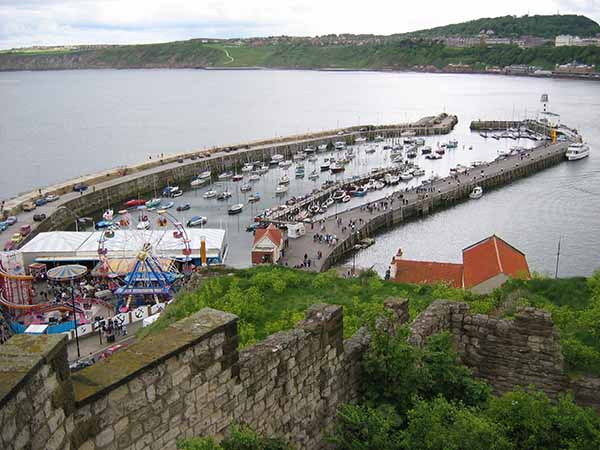 Scarborough Castle sits atop the cliffs overlooking the two bays which form the towns beaches, with a harbour between the two. The South Bay has more amusement centres and is more lively of the two. South Bay is overlooked by the massive 12 floor Grand Hotel, the biggest brick building in Europe when it opened in 1867. In 1660 it is said Scarborough became the first sea bathing centre making Scarborough the first seaside resort in the country. The town has several museums, the most notable being The Heritage Centre on the seafront telling the towns history from 966 to 1966.
Robin Hood's Bay was once very popular with smugglers. The town has twisting, narrow streets and visitors haver to park above the village and visit on foot. In the 19th Century it was a major fishing port and its story is told in The Fisherhead Museum.
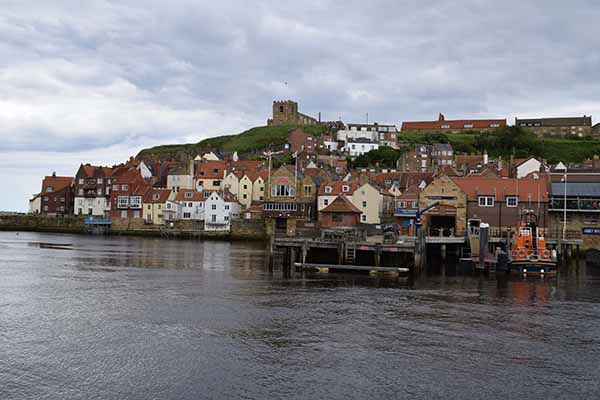 Whitby, built on the steep banks of the River Esk, has to be one of the most beautiful towns in the country. A major fishing port it is overlooked by the jagged remains of Whitby Abbey on one bank of the river and a statue of Captain Cook on the other. His statue is there as the Endeavour, Resolution and Adventure, the fleet he sailed around the world in, were built in Whitby. Next to his statue is a massive whalebone, commemorating the fact Whitby was a major whaling centre in the 18th and 19th centuries. Whitby is still a busy fishing port and smokeries abound smoking herrings to produce kippers. Needless to say Whitby Museum fully commemorates the towns nautical history. There is a small beach and fish restaurants abound round the harbour. Whitby is a very popular destination and it gets very busy, especially on hot summer days.
Staithes is almost a mini Whitby and it was where Captain Cook, surprisingly, served an apprenticship as a haberdasher. Needless to say this connection with Cook is taken advantage of with a heritage site in his name. Locally built boats called cobbles used to sail from the harbour, although nowadays only a few remain. The narrow twisting streets of the town are well worth exploring.
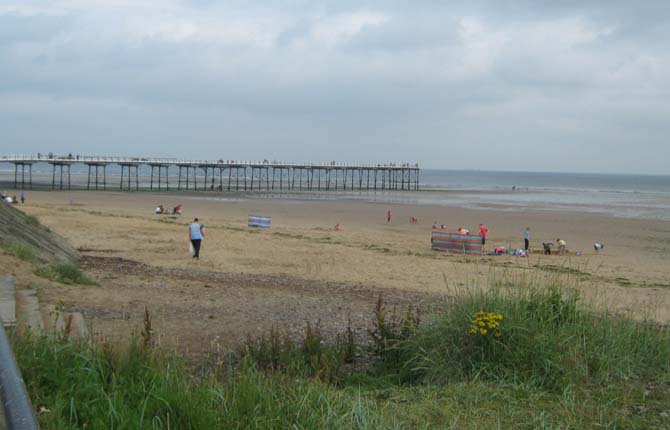 I have to confess a soft spot for Saltburn, a lovely resort - almost perfect in my book. A few amusement arcades but nothing over the top, a simplistic but elegant pier. Vast stretches of golden sands and it's home to the oldest surviving hydraulic cliff lift in the country making the trip from beach to cliff top a delight.
Redcar is a typical bucket and spade resort as well as being a busy fishing port, although there is no harbour as such with boats being beached when not at sea. Attractions include a racecourse and the RNLI Zetland Museum, which is home to the oldest surviving lifeboat in the world.
Once a major shipbuilding centre Hartlepool Docks is now a marina and a collection of old ships. A museum tells the story of the port from Saxon times and it includes a reconstruction of the port as it would have been in the early 1900's.
Sunderland has long been an industrial centre and glass making has been an intrinsic part of the town with the National Glass Centre telling the story. The more general telling of Sunderland's industrial heritage will be found in the museum and art gallery, whilst the Monkwearmouth Station Museum has a large collection of rail memorabilia.
South Shields is probably considered a suburb of Newcastle but excavations have unearthed some significant Roman remains.
Across the River Tyne at North Shields the Stevenson Railway Museum tells of the early days of the railway and it features one of Stevenson's locomotives, there is a steam railway linking the museum to the local Metro.
On the outer reaches of the Newcastle Metro Whitley Bay is Newcastle's seaside resort with lines of guesthouses along the promenade. There is a sandy beach and at the southern end of the town the old port of Cullercoats has now been subsumed by the town.
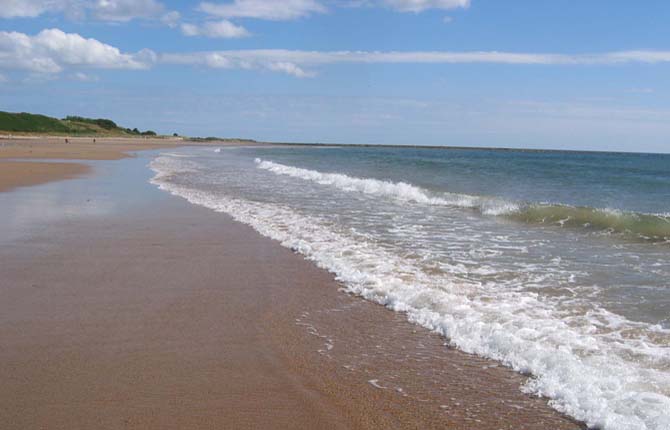 Alnmouth was an important fishing port before silting up in the 1860's, now it is a residential town with a marina, however just south of the town is a lovely, three mile long, sandy beach.
Boulmer is a small natural harbour with a small fishing port.
Craster has a small harbour which drains of water at low tide. Only a few fishing boats remain, landing crabs and lobsters a far cry from the days when the port was renown for its kippers. Herring still smoked in the town but the raw product is imported from Scotland. is Nearby Dunstanburgh Castle can only be reached by walking from Craster but is worth the effort.
It's not the village of Bamburgh that is the attraction, although it is delightful in its own right, but the splendid castle which overlooks the village. The oldest surviving part of the castle is its 8th century well. The castle also offers views of the Farne Islands, 4½ miles offshore, a world famous reserve for sea birds, the islands are also a major breeding grounds for grey seals. The public are only allowed on two of the 28 islands.
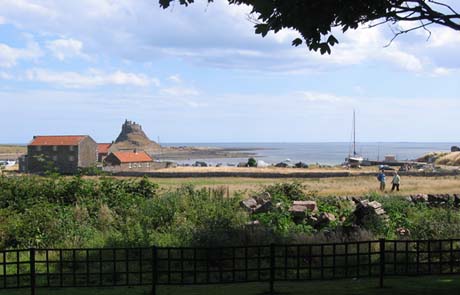 Holy Island is cut off from the mainland for 11 of every 24 hours which means the lives of those who live there as well as mundane matters like bus timetables and postal deliveries are all driven by the tide times. One of the earliest Christian settlements in the country was founded on the island by the monk Aidan in 640AD. The Lindisfarne Gospels, one of the greatest examples of Celtic art, was written at the Lindisfarne Priory (the Gospels can now found in the British Library). There are a handful of delightful cottages outside the priory and the far end of the island is home to Lindisfarne Castle. You don't have to be of any religious persuasion to feel the serenity and beauty of the island.
The tranquility of Berwick-upon-Tweed belies its unsettled and sometimes bloody history as it has systematically been Scottish and English over the years - typical of an important border town. Clues to its past lie in the heavy fortifications surrounding the town as control has relentlessly switched between Scotland and England. Currently the town is English, although it has a distinct Scottish feel. Three bridges spam the River Tweed the oldest dating back to the early 1600's. The Berwick Barracks tells the turbulent history of the town.
Previous: Deal - Boston Next: Eyemouth - John O'Groats
Skegness is a growing resort, in more ways than one, as it's six mile stretch of sandy beach gets bigger with a receding sea. Skeggy as it's known by the locals is another product of the Victorian obsession with the sea and the growth of resort coincided with the arrival of the railway, bringing hoards of visitors from the Midlands. Gardens abound and the usual collection of amusement arcades, funfairs and lidos can be found. Church Farm Museum show how farming was in Victorian times before the advent if the internal combustion engine. Just south of the town is Gibraltar Point Nature Reserve containing a large variety of habitats. Just north of Skegness is the site where Billy Butlin opened his first holiday camp in 1936 and it's still going strong.Although Mablethorpe has amusement arcades and a funfair it is a much more genteel resort than many and its long sandy beach is popular. To the north of the town is The Animal Gardens And Seal Trust who care for injured seals. Open February - November. Admission Adult £15.00, Seniors £14.00, Children £11.00. The Old Curiosity Museum is one of those irresistible places with thousands of everyday items on display. The original town of Mablethorp was washed away in 1289 and when there is an extreme spring tide the original shoreline and tree stumps can be seen.
Cleethorpes is the third of the large resorts on the Lincolnshire coast and another that owes its popularity to the railway, indeed it is only a short step from your train carriage to the promenade. The sea goes out for over a mile but walkers need to be careful as the tide can come in very quickly. So shallow is the beach bathers can walk out 70 yards at high tide and still only be waist deep in the water. South of the resort is the Lakeside Leisure Area with fishing and wildfowl. A light railway runs through the park running to a theme park.
Cleethorpes is, to all extents and purposes, an extension of Grimsby. Grimsby was one of the great fishing ports but the deep sea fishing fleet has now gone but there is still a large commercial dock. The National Fishing Heritage Centre tells the story of the port and its fishermen. For the seaside you need to go to Cleethorpes but Grimsby has plenty of green spaces and parks.Immingham is a commercial port but is not open to visitors. The towns claim to fame is it was the original starting point for the Pilgrim Fathers as they set off to America and a monument stands outside the parish church.
Barton-upon-Humber is a nicely preserved Georgian town and worth a stroll round, however it is better known for being one end of the magnificent Humber Bridge. The bridge is tolled for motor vehicles but pedestrians and cyclists can cross for free and it offers some stunning views - as long as you have a head for heights.
Hull or, to give the town its formal name, Kingston Upon Hull is a major port and commercial centre. Clearly the people of Hull are blessed with a great sense of humour, as there is no other explanation sane explanation for them returning the lampoonable, champagne socialist, John Prescot as their MP for 40 years.
Spurn Head is a peninsular three miles lung and a mere 30ft (9m) wide with a sandy beach on the seaward side and mudflats on the estuary side. Now a nature reserve and a Heritage Coast it is great for viewing bird migrations as well as watching seals and porpoises. There is a charge to drive along the spit and dogs are not allowed, not even inside cars. At the end of the spit are some cottages which house the only full-time Lifeboat crew in the country. There is also a jetty which is used by the Humber Pilots.Easington is a town of contrasts as to the north is a large industrial complex including a North Sea gas terminal. This has proved controversial as cliff erosion has increased considerably since the opening of the terminal. The old town consists of houses built from sea cobbles in various natural colours. The town also has a medieval church and a 15th century thatched barn.
Withernsea has a long sandy beach but its main attraction is its 1892 lighthouse, now a museum depicting the life of the RNLI and Coastguard.
The old town of Hornsea has cobbled cottages. The town also boasts a Freeport Shopping Outlet Centre but when visited in 2013 almost half the unit were empty. Hornsea Mere, an RSPB site, is Yorkshire's largest freshwater lake and a reserve of international significance.
Bridlington has two, one mile long, beaches separated by a harbour which is still a busy fishing port. Fishing trips can be arranges as well as cruises to see the bird colonies at Flamborough Head.Flamborough Head is a chalk headland and home to many birds and if you don't fancy the cruise from Bridlington to view the biers then teh cliffs are open to walkers. Flamborough village itself is a pretty location with a village street of fishermen's cottages and a small market.
Filey is one of those resorts which will suit most people. With a six mile long beach, the southern end of which is quiet quiet and unspoiled, whilst the northern end has the amusement arcades and other associated paraphernalia. A mile long promontory called Filey Brigg has hides for birdwatchers.
Scarborough Castle sits atop the cliffs overlooking the two bays which form the towns beaches, with a harbour between the two. The South Bay has more amusement centres and is more lively of the two. South Bay is overlooked by the massive 12 floor Grand Hotel, the biggest brick building in Europe when it opened in 1867. In 1660 it is said Scarborough became the first sea bathing centre making Scarborough the first seaside resort in the country. The town has several museums, the most notable being The Heritage Centre on the seafront telling the towns history from 966 to 1966.Robin Hood's Bay was once very popular with smugglers. The town has twisting, narrow streets and visitors haver to park above the village and visit on foot. In the 19th Century it was a major fishing port and its story is told in The Fisherhead Museum.
Whitby, built on the steep banks of the River Esk, has to be one of the most beautiful towns in the country. A major fishing port it is overlooked by the jagged remains of Whitby Abbey on one bank of the river and a statue of Captain Cook on the other. His statue is there as the Endeavour, Resolution and Adventure, the fleet he sailed around the world in, were built in Whitby. Next to his statue is a massive whalebone, commemorating the fact Whitby was a major whaling centre in the 18th and 19th centuries. Whitby is still a busy fishing port and smokeries abound smoking herrings to produce kippers. Needless to say Whitby Museum fully commemorates the towns nautical history. There is a small beach and fish restaurants abound round the harbour. Whitby is a very popular destination and it gets very busy, especially on hot summer days.Staithes is almost a mini Whitby and it was where Captain Cook, surprisingly, served an apprenticship as a haberdasher. Needless to say this connection with Cook is taken advantage of with a heritage site in his name. Locally built boats called cobbles used to sail from the harbour, although nowadays only a few remain. The narrow twisting streets of the town are well worth exploring.
I have to confess a soft spot for Saltburn, a lovely resort - almost perfect in my book. A few amusement arcades but nothing over the top, a simplistic but elegant pier. Vast stretches of golden sands and it's home to the oldest surviving hydraulic cliff lift in the country making the trip from beach to cliff top a delight.Redcar is a typical bucket and spade resort as well as being a busy fishing port, although there is no harbour as such with boats being beached when not at sea. Attractions include a racecourse and the RNLI Zetland Museum, which is home to the oldest surviving lifeboat in the world.
Once a major shipbuilding centre Hartlepool Docks is now a marina and a collection of old ships. A museum tells the story of the port from Saxon times and it includes a reconstruction of the port as it would have been in the early 1900's.
Sunderland has long been an industrial centre and glass making has been an intrinsic part of the town with the National Glass Centre telling the story. The more general telling of Sunderland's industrial heritage will be found in the museum and art gallery, whilst the Monkwearmouth Station Museum has a large collection of rail memorabilia.
South Shields is probably considered a suburb of Newcastle but excavations have unearthed some significant Roman remains.
Across the River Tyne at North Shields the Stevenson Railway Museum tells of the early days of the railway and it features one of Stevenson's locomotives, there is a steam railway linking the museum to the local Metro.
On the outer reaches of the Newcastle Metro Whitley Bay is Newcastle's seaside resort with lines of guesthouses along the promenade. There is a sandy beach and at the southern end of the town the old port of Cullercoats has now been subsumed by the town.
Alnmouth was an important fishing port before silting up in the 1860's, now it is a residential town with a marina, however just south of the town is a lovely, three mile long, sandy beach.Boulmer is a small natural harbour with a small fishing port.
Craster has a small harbour which drains of water at low tide. Only a few fishing boats remain, landing crabs and lobsters a far cry from the days when the port was renown for its kippers. Herring still smoked in the town but the raw product is imported from Scotland. is Nearby Dunstanburgh Castle can only be reached by walking from Craster but is worth the effort.
It's not the village of Bamburgh that is the attraction, although it is delightful in its own right, but the splendid castle which overlooks the village. The oldest surviving part of the castle is its 8th century well. The castle also offers views of the Farne Islands, 4½ miles offshore, a world famous reserve for sea birds, the islands are also a major breeding grounds for grey seals. The public are only allowed on two of the 28 islands.
Holy Island is cut off from the mainland for 11 of every 24 hours which means the lives of those who live there as well as mundane matters like bus timetables and postal deliveries are all driven by the tide times. One of the earliest Christian settlements in the country was founded on the island by the monk Aidan in 640AD. The Lindisfarne Gospels, one of the greatest examples of Celtic art, was written at the Lindisfarne Priory (the Gospels can now found in the British Library). There are a handful of delightful cottages outside the priory and the far end of the island is home to Lindisfarne Castle. You don't have to be of any religious persuasion to feel the serenity and beauty of the island.The tranquility of Berwick-upon-Tweed belies its unsettled and sometimes bloody history as it has systematically been Scottish and English over the years - typical of an important border town. Clues to its past lie in the heavy fortifications surrounding the town as control has relentlessly switched between Scotland and England. Currently the town is English, although it has a distinct Scottish feel. Three bridges spam the River Tweed the oldest dating back to the early 1600's. The Berwick Barracks tells the turbulent history of the town.
Previous: Deal - Boston Next: Eyemouth - John O'Groats