
Coast - Portsmouth to Dover
This section of the coastal tour takes in the mainly shingle coastline of southern England. Starting at the grand naval city of Portsmouth, passing through small towns and ports, via the grand resorts of Bognor Regis, Worthing and Brighton.
Through the more genteel Eastbourne, historic Hastings and the ports of Folkestone and Dover.
As well as coastal locations we will also cover any interesting sights which may be close to the coast and worth a detour.
Clicking location names highlighted in bold purple will open a new page with more detailed information
Prices quoted are correct as of May 2026
Through the more genteel Eastbourne, historic Hastings and the ports of Folkestone and Dover.
As well as coastal locations we will also cover any interesting sights which may be close to the coast and worth a detour.
Clicking location names highlighted in bold purple will open a new page with more detailed information
Prices quoted are correct as of May 2026
Previous: Bristol - Portchester Next: Deal - Boston
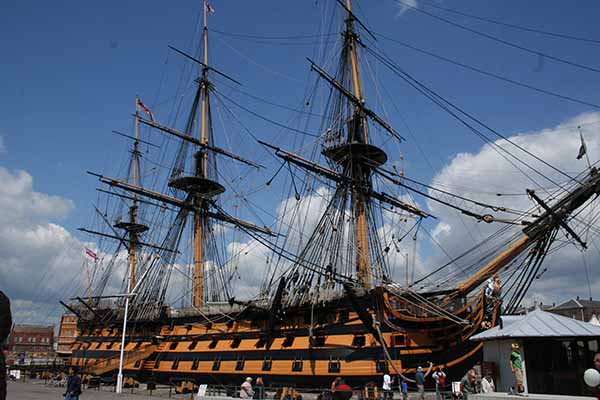 Portsmouth, due to it's protected position, has been Britain's principal naval port for millennia. Even as late as the early 1960's it was a garrison town, subject to military law.
Because of its military importance the city suffered severe damage in World War 2 and the damage was still very in evidence when I was growing up in the area in the 1960's.
The city has been transformed in the last few decades and it has attraction for all the family. Military attractions, unsurprisingly, are to the fore with most the historic Dockyard now a heritage centre and a D-Day Museum housing a 20th century version of a Bayeux Tapestry.
Southsea forms the coastal part of the city, although it is a shingle beach, with two piers and a large common.
Leaving Portsmouth the A27 will take you east but following this road means you will miss some gems.
Hayling Island is by no means a sexy resort, it has no major attractions as such, but is home to a wide shingle beach and grassy dunes and it's a way to avoid massive crowds. There is a small funfair tor the little ones and a miniature train service running along the front. Hayling is home to a few holiday camps. The downside of Hayling Island is there is only one road onto and off the island so traffic jams are not uncommon on hot sunny days.
By by-passing the A27 trunk road and taking the old A27, now the A259, you will find a few hidden gems, the first of which is Emsworth. A former fishing port, now a marina. There are some nice harbour side pubs, some interesting shops and plenty of scenic walks.
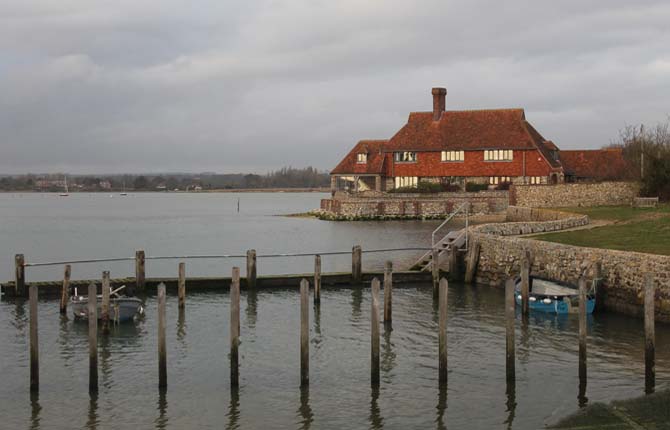 Bosham, pronounced "Bozzam", is arguably one of the most beautiful villages on the south coast. Another place with little razz, it is a beauty spot enjoyed by many. No longer a fishing port, you will more likely see yachts rather than fishing boats, there are plenty of walks to be had along with some delightful pubs, which can get very busy during summer weekends. Watch where you park as some of the parking areas are in the tidal zone. Bosham is an ideal place to while away a couple of hours.
Fishbourne Roman Palace, a couple of miles from the coast, is worth a detour if history floats your boat. Discovered by accident whilst new water mains were being laid the site has been extensively excavated. The site houses the largest collection of in-situ Roman mosaics in the country and the gardens have been restored as to how they would have been in Roman times. Admission: Adult £15.00, Child £7.50, Concessions £14.00
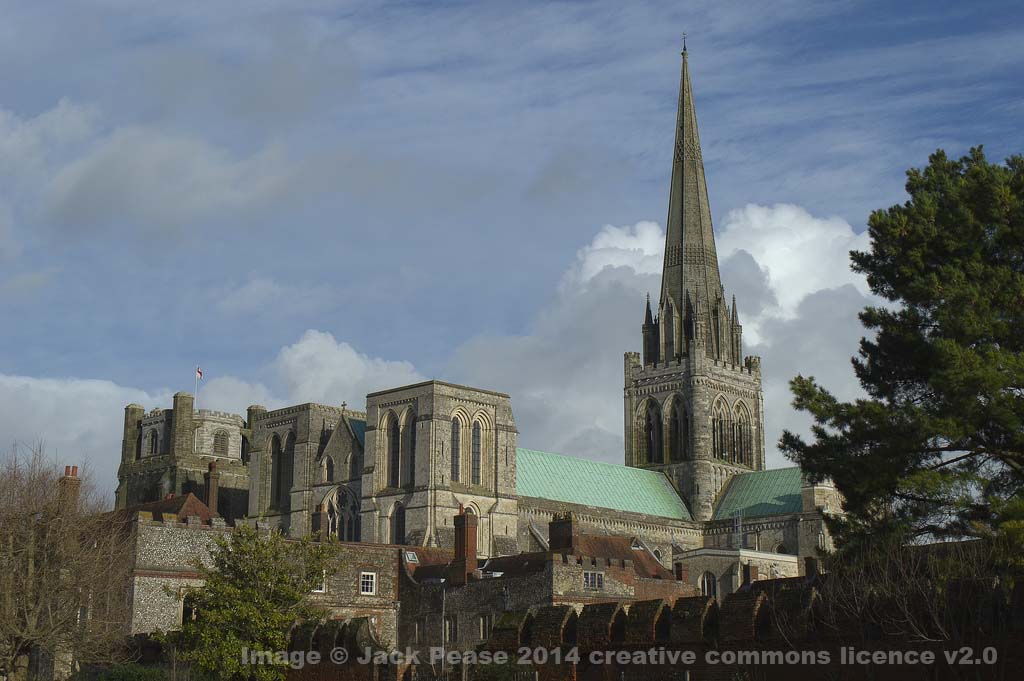 Chichester is the second city we reach on this stretch of the coastline. A Roman city Chichester still maintains a basic grid pattern within the city walls. Four main streets converge on a market cross, near the magnificent Norman cathedral. The city centre is mainly traffic free and as well as the major chain stores it has many interesting independent stores as well.
For culture vultures the magnificent Festival Theatre is a must and their summer festival attracts some of the biggest names in the acting world. The Southern Leisure Centre, just outside the city walls, is a vast green space with lakes, walks and water sports.
Dell Quay is now a small hamlet with a few small boatyards and a slipway, yet in the 18th century it was amongst the top ten most important ports in the country. Nearby walks will be of interest to bird watchers. Parking is very limited though.
The Witterings are two distinct but different areas. West Wittering has a mile of coastline in a well heeled area. Swimming is safe and the beach is patrolled by lifeguards. There is a 76 acre nature reserve. East Wittering is a two mile stretch of beach, sandy at low tide. Despite the expanse of beach there are only two access points and only one of those has a car park close to the beach.
Selsey points out into the English Channel but strong currents restrict swimming to areas half a mile away from the point. lovers of shell fish will be happy here with locally caught produce on sale.
Pagham was once a fishing port which is now a 1,000 acre nature reserve which is a nature lovers delight with a varied selection of wildfowl, flora, invertebrates and small mammals. The picturesque village is worth a stroll.
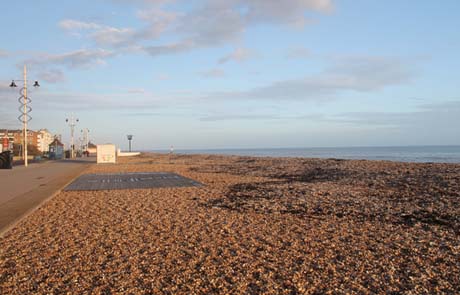 Bognor Regis has a seven mile stretch of coastline with a mixture of sandy and shingle beaches. Refined compared to some resorts, there are funfairs and holiday camps but nothing over the top. A relatively new resort, founded in the 18th century it was a favourite of Queen Victoria. Her grandson George V bestowed the "Regis" after recuperating from serious illness there in 1928.
Climping Sands is a 2½ mile stretch of unspoiled coastline offering good views of nearby Arundle from the eastern end.
Arundle is worth a short detour. Home to the Duke of Norfolk (yes I know it's nowhere near Norfolk) Arundle Castle is worth a visit. (Admission: Adults £17 - £31 and Children £8 - £13). The massive Roman Catholic cathedral dominates the skyline and is also worth a visit.
Littlehampton is an unpretentious resort with a sandy beach and a small amusement park for the children. The beaches are safe, apart from the areas near the mouth of the River Arun, where strong tides pose a danger. The towns marina and boatyards are the other side of the river, reached by a footbridge and a seasonal passenger ferry.
Worthing is the largest resort in West Sussex, with five miles of shingle beaches, fine gardens and a pier. The town has a reputation as a retirement town but, in truth, has enough to suit all ages although it is much quieter and genteel than it's nearby brash neighbour Brighton.
Hove is often assumed to be part of Brighton but it is a town in its own right. Immediately adjacent to Brighton it is the yang to Brighton's ying. Much more sedate than its neighbour it has plenty of attractions including a lagoon where windsurfing can be learnt in relative safety. It is also home to Sussex County Cricket ground. A town of elegant squares and splendid Victorian architecture it is the perfect, quiet seaside resort.
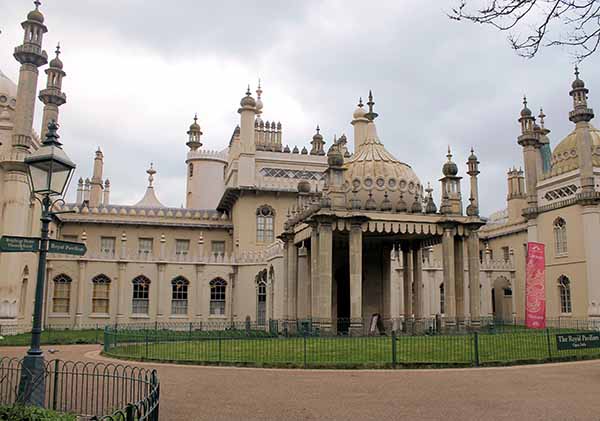 Brighton is one of the great UK seaside resorts and has been attracting visitors for over two centuries. With grand hotels, two and a half piers and a lively nightlife Brighton really came into its own with the arrival of the railway, putting it in easy striking distance of London.
The Pavilion is one of the iconic attractions in the city, eccentrically designed for George IV as a seaside getaway it's onion domes are instantly recognisable. Internally it could be described as Regency Chav, with Indian and Chinese influences. Admission: Adult £21.50, Child £13.00, local residents £16.50 (5% discount if booking online)
The Lanes is an iconic shopping area in the old part of the city and is appropriate name as most of the narrow lanes are traffic free. Although jewelers predominate in this quarter there are plenty of quirky independent shops here and it's a good area in which to while away an hour or two and if you get weary there are plenty of cafés and bars where you can chill and relax.
When the Spinnaker Tower opened in Portsmouth Brighton wanted to go one better and it built the Brighton i360. Although the structure itself is n its Portsmouth rical, the viewing gallery reaches 138m, 28m taller than Spinnakers highest viewing gallery. Costs: Adult £18.50 - £23.00, seniors £16.50 - £21 and child £9.00 - £12.50. Locals can ride for a fiver with children half price.
The beach is shingle but is, nonetheless, popular and the surviving pier has all you would expect at a popular coastal resort.
Newhaven is know as a cross-channel port with two return crossings most days. Other than that it is pretty nondescript with the only real "attraction" being the 19th century fort, one of Palmerston's Follies (see Portsmouth)
Seaford is a relatively undeveloped resort. It is a very exposed beach with a steep drop in the beach meaning swimming at high tide should be for strong swimmers only. The nearby Seaford Head Nature Reserve houses many migratory birds as well as offering good views from the 282ft (86m) cliffs.
Next to Seaford Head is the Seven Sisters Country Park although, despite the name, there are actually eight cliffs. Forming part of the 80 mile South Downs Way there are shorter three and one-and-half walks available.
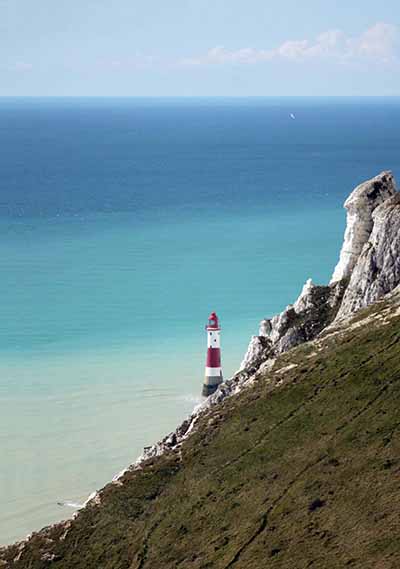 At 534 feet (163m) Beachy Head is the tallest chalk cliff on the south coast and on a clear day it offers views from Dungeness in the east to the Isle of Wight in the west. A small natural history centre is open summer weekends. There is a hilltop nature trail of about a mile but only for those with a head for heights as it includes an unfenced, cliff-edge section. Below the cliff is the 143ft (43m) tall, red and white striped lighthouse. Parking is limited in the area but a fine balance has to be achieved between catering for visitors and not spoiling the outstanding natural beauty.
Eastbourne is an ideal resort for those looking for something between the brash and ultra-quiet. The shingle beach is about three miles long but it is the elegant gardens for which the town is renowned, as you walk along the promenade another garden will suddenly appear. The town has an interesting Heritage Centre, a large bandstand (with seating for 3,500 spectators) and it's possible to go on a boat trip to view Beachy Head from sea level.
Bexhill has a racy claim to fame in that back in 1901 it was the first resort to allow mixed sex bathing. Nowadays it is a quiet resort with its main attraction being the DE La War Pavilion, Bexhill's version of a pier.
St Leonards, now part of Hastings, is a purpose built resort, created between 1827 and 1837 for wealthy visitors and most of the lavish buildings survive along with an excellent public garden. Hastings, famed for it's famous battle - even though the battle was actually six miles inland at the appropriately named village of Battle, has been a port for over 1,000 years. There is a delightful old town, situated between two cliffs. The remains of the Norman castle, the first built by William after the invasion, are open to the public. The harbour is still busy and there is a daily fish auction. The resort beach is to the west of the harbour and stretches for about three miles.
Winchelsea is a quiet little town, a mile from the coast, perched on a ridge. Much of the medieval town remains and is worth a visit. The town also overlooks the Pett Level which is a haven for wildfowl.
Even more medieval in appearance is Rye with its imposing stone gateway and, in places, cobbled streets. In days of yore the tide used to lap round the towns walls although nowadays it is two miles from the sea, although the town is surrounded by rivers and canals. Now 1½ miles from the town Rye Harbour is left high and dry at low tide but it still boasts a small fishing fleet as well as a nature reserve.
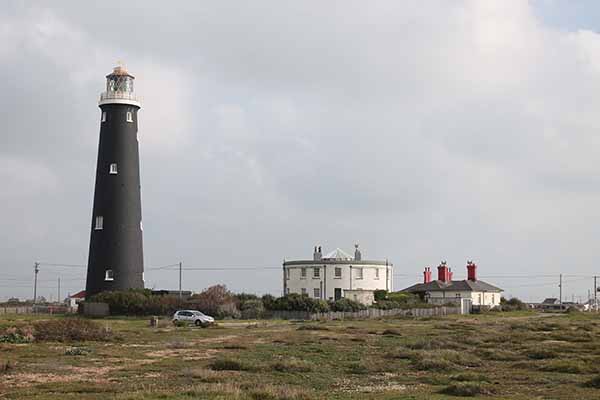 Dungeness is a shingle promontory which has been a hazard to shipping since time in memorial and there has been a lighthouse there since 1615 and three lighthouses, their remains still survive in various formed. The base of the 1792 lighthouse has been converted into houses, whilst visitors can climb the 1904 lighthouse to get some spectacular views.
Fishermen's huts are scattered around and some sell fresh fish, whilst others have been converted into some very desirable holiday homes. Dominating the skyline is the nuclear power station but even that adds to the atmosphere of the place.
There is a nature reserve at which over 270 different species of bird have been noted. Ideally you need a car to explore it to its full potential but if you don't have a car all is not lost as the Romney, Hythe and Dymchurch railway terminates near the old lighthouses. Swimming is dangerous due to strong currents.
Dymchurch is a Jekyll and Hyde sort of town with brash amusement arcades and funfairs along the seashore and a quiet, refined High Street behind. A restored Martello Tower offers some good views.
A canal separates the town of Hythe from its beach. The old medieval town is home to St Leonards Church, home to some 2,000 skulls and 8,000 thighbones. the beach is shingle and the fishing boats are "parked" on the beach when not out at sea. The town is the terminus of the Romney, Hythe and Dymchurch railway.
Hawkinge Airport was a key airport in the Battle Of Britain and is now home to the Kent Battle Of Britain Museum. Open Easter - September, closed Monday's, except Bank Holidays. 2015 Admission: Adults £12.00, Seniors £11.00, Children £5.00
Folkestone is probably best known as a cross Channel ferry port, however it is a resort, albeit a resort without a beach. Instead it has wide lawns and superb gardens. I say there is no beach, that's not strictly true as a small area is exposed at low tide. The old High Street slopes down to the quaint harbour, and the road is home to some quaint chic shops.
The Leas is a walk along the top of the cliffs with a large park attached, if you feel lazy there is a funicular linking the top with the bottom but zig-zag paths through delightful gardens provide a lovely route from top to bottom.
The road from The Leas to the Harbour has been renamed the Road Of Remembrance commemorating the millions of troops who marched down it in World War 1. The fencing along the road is covered in knotted poppies in all shapes, colours and sizes.
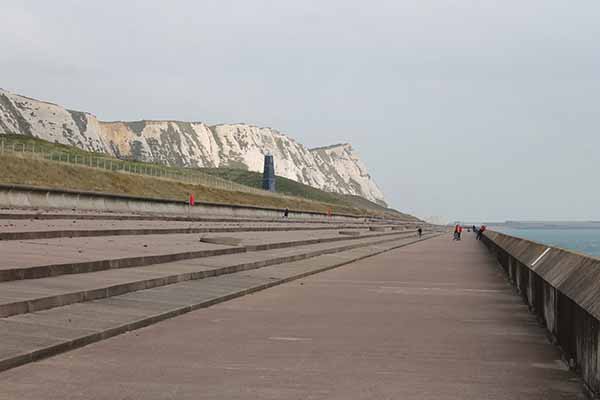 So you decide to build a tunnel between the United Kingdom and France, a lot of digging and a lot of chalk and stone removed. So what do you do with all the stuff you dig out.
Well on the UK side the answer is simple you dump it, all 49.1 million cubic yards of it, at the bottom of Shakespeare Cliff and you then build a sea wall to contain it, leave it to turn wild and, hey presto, you have a nature reserve. In this case Samphire Hoe. Accessible from the A20 west bound this haven is home to many species of birds, some residents and others migratory and apart from very reasonable parking charges it's all free.
Dover has been the main cross Channel port for over 2,000 years, mainly because it is the closest point to mainland Europe. Dominated by its famous white cliffs the ferry port is still the hub of the town. Dover Castle atop the cliffs offers some stunning views (obviously on a clear day you can see France), next to which are the remains of a Roman lighthouse. There is small beach offers safe bathing.
Previous: Bristol - Portchester Next: Deal - Boston
Portsmouth, due to it's protected position, has been Britain's principal naval port for millennia. Even as late as the early 1960's it was a garrison town, subject to military law.Because of its military importance the city suffered severe damage in World War 2 and the damage was still very in evidence when I was growing up in the area in the 1960's.
The city has been transformed in the last few decades and it has attraction for all the family. Military attractions, unsurprisingly, are to the fore with most the historic Dockyard now a heritage centre and a D-Day Museum housing a 20th century version of a Bayeux Tapestry.
Southsea forms the coastal part of the city, although it is a shingle beach, with two piers and a large common.
Leaving Portsmouth the A27 will take you east but following this road means you will miss some gems.
Hayling Island is by no means a sexy resort, it has no major attractions as such, but is home to a wide shingle beach and grassy dunes and it's a way to avoid massive crowds. There is a small funfair tor the little ones and a miniature train service running along the front. Hayling is home to a few holiday camps. The downside of Hayling Island is there is only one road onto and off the island so traffic jams are not uncommon on hot sunny days.
By by-passing the A27 trunk road and taking the old A27, now the A259, you will find a few hidden gems, the first of which is Emsworth. A former fishing port, now a marina. There are some nice harbour side pubs, some interesting shops and plenty of scenic walks.
Bosham, pronounced "Bozzam", is arguably one of the most beautiful villages on the south coast. Another place with little razz, it is a beauty spot enjoyed by many. No longer a fishing port, you will more likely see yachts rather than fishing boats, there are plenty of walks to be had along with some delightful pubs, which can get very busy during summer weekends. Watch where you park as some of the parking areas are in the tidal zone. Bosham is an ideal place to while away a couple of hours.Fishbourne Roman Palace, a couple of miles from the coast, is worth a detour if history floats your boat. Discovered by accident whilst new water mains were being laid the site has been extensively excavated. The site houses the largest collection of in-situ Roman mosaics in the country and the gardens have been restored as to how they would have been in Roman times. Admission: Adult £15.00, Child £7.50, Concessions £14.00
Chichester is the second city we reach on this stretch of the coastline. A Roman city Chichester still maintains a basic grid pattern within the city walls. Four main streets converge on a market cross, near the magnificent Norman cathedral. The city centre is mainly traffic free and as well as the major chain stores it has many interesting independent stores as well.For culture vultures the magnificent Festival Theatre is a must and their summer festival attracts some of the biggest names in the acting world. The Southern Leisure Centre, just outside the city walls, is a vast green space with lakes, walks and water sports.
Dell Quay is now a small hamlet with a few small boatyards and a slipway, yet in the 18th century it was amongst the top ten most important ports in the country. Nearby walks will be of interest to bird watchers. Parking is very limited though.
The Witterings are two distinct but different areas. West Wittering has a mile of coastline in a well heeled area. Swimming is safe and the beach is patrolled by lifeguards. There is a 76 acre nature reserve. East Wittering is a two mile stretch of beach, sandy at low tide. Despite the expanse of beach there are only two access points and only one of those has a car park close to the beach.
Selsey points out into the English Channel but strong currents restrict swimming to areas half a mile away from the point. lovers of shell fish will be happy here with locally caught produce on sale.
Pagham was once a fishing port which is now a 1,000 acre nature reserve which is a nature lovers delight with a varied selection of wildfowl, flora, invertebrates and small mammals. The picturesque village is worth a stroll.
Bognor Regis has a seven mile stretch of coastline with a mixture of sandy and shingle beaches. Refined compared to some resorts, there are funfairs and holiday camps but nothing over the top. A relatively new resort, founded in the 18th century it was a favourite of Queen Victoria. Her grandson George V bestowed the "Regis" after recuperating from serious illness there in 1928.Climping Sands is a 2½ mile stretch of unspoiled coastline offering good views of nearby Arundle from the eastern end.
Arundle is worth a short detour. Home to the Duke of Norfolk (yes I know it's nowhere near Norfolk) Arundle Castle is worth a visit. (Admission: Adults £17 - £31 and Children £8 - £13). The massive Roman Catholic cathedral dominates the skyline and is also worth a visit.
Littlehampton is an unpretentious resort with a sandy beach and a small amusement park for the children. The beaches are safe, apart from the areas near the mouth of the River Arun, where strong tides pose a danger. The towns marina and boatyards are the other side of the river, reached by a footbridge and a seasonal passenger ferry.
Worthing is the largest resort in West Sussex, with five miles of shingle beaches, fine gardens and a pier. The town has a reputation as a retirement town but, in truth, has enough to suit all ages although it is much quieter and genteel than it's nearby brash neighbour Brighton.
Hove is often assumed to be part of Brighton but it is a town in its own right. Immediately adjacent to Brighton it is the yang to Brighton's ying. Much more sedate than its neighbour it has plenty of attractions including a lagoon where windsurfing can be learnt in relative safety. It is also home to Sussex County Cricket ground. A town of elegant squares and splendid Victorian architecture it is the perfect, quiet seaside resort.
Brighton is one of the great UK seaside resorts and has been attracting visitors for over two centuries. With grand hotels, two and a half piers and a lively nightlife Brighton really came into its own with the arrival of the railway, putting it in easy striking distance of London.The Pavilion is one of the iconic attractions in the city, eccentrically designed for George IV as a seaside getaway it's onion domes are instantly recognisable. Internally it could be described as Regency Chav, with Indian and Chinese influences. Admission: Adult £21.50, Child £13.00, local residents £16.50 (5% discount if booking online)
The Lanes is an iconic shopping area in the old part of the city and is appropriate name as most of the narrow lanes are traffic free. Although jewelers predominate in this quarter there are plenty of quirky independent shops here and it's a good area in which to while away an hour or two and if you get weary there are plenty of cafés and bars where you can chill and relax.
When the Spinnaker Tower opened in Portsmouth Brighton wanted to go one better and it built the Brighton i360. Although the structure itself is n its Portsmouth rical, the viewing gallery reaches 138m, 28m taller than Spinnakers highest viewing gallery. Costs: Adult £18.50 - £23.00, seniors £16.50 - £21 and child £9.00 - £12.50. Locals can ride for a fiver with children half price.
The beach is shingle but is, nonetheless, popular and the surviving pier has all you would expect at a popular coastal resort.
Newhaven is know as a cross-channel port with two return crossings most days. Other than that it is pretty nondescript with the only real "attraction" being the 19th century fort, one of Palmerston's Follies (see Portsmouth)
Seaford is a relatively undeveloped resort. It is a very exposed beach with a steep drop in the beach meaning swimming at high tide should be for strong swimmers only. The nearby Seaford Head Nature Reserve houses many migratory birds as well as offering good views from the 282ft (86m) cliffs.
Next to Seaford Head is the Seven Sisters Country Park although, despite the name, there are actually eight cliffs. Forming part of the 80 mile South Downs Way there are shorter three and one-and-half walks available.
At 534 feet (163m) Beachy Head is the tallest chalk cliff on the south coast and on a clear day it offers views from Dungeness in the east to the Isle of Wight in the west. A small natural history centre is open summer weekends. There is a hilltop nature trail of about a mile but only for those with a head for heights as it includes an unfenced, cliff-edge section. Below the cliff is the 143ft (43m) tall, red and white striped lighthouse. Parking is limited in the area but a fine balance has to be achieved between catering for visitors and not spoiling the outstanding natural beauty.Eastbourne is an ideal resort for those looking for something between the brash and ultra-quiet. The shingle beach is about three miles long but it is the elegant gardens for which the town is renowned, as you walk along the promenade another garden will suddenly appear. The town has an interesting Heritage Centre, a large bandstand (with seating for 3,500 spectators) and it's possible to go on a boat trip to view Beachy Head from sea level.
Bexhill has a racy claim to fame in that back in 1901 it was the first resort to allow mixed sex bathing. Nowadays it is a quiet resort with its main attraction being the DE La War Pavilion, Bexhill's version of a pier.
St Leonards, now part of Hastings, is a purpose built resort, created between 1827 and 1837 for wealthy visitors and most of the lavish buildings survive along with an excellent public garden. Hastings, famed for it's famous battle - even though the battle was actually six miles inland at the appropriately named village of Battle, has been a port for over 1,000 years. There is a delightful old town, situated between two cliffs. The remains of the Norman castle, the first built by William after the invasion, are open to the public. The harbour is still busy and there is a daily fish auction. The resort beach is to the west of the harbour and stretches for about three miles.
Winchelsea is a quiet little town, a mile from the coast, perched on a ridge. Much of the medieval town remains and is worth a visit. The town also overlooks the Pett Level which is a haven for wildfowl.
Even more medieval in appearance is Rye with its imposing stone gateway and, in places, cobbled streets. In days of yore the tide used to lap round the towns walls although nowadays it is two miles from the sea, although the town is surrounded by rivers and canals. Now 1½ miles from the town Rye Harbour is left high and dry at low tide but it still boasts a small fishing fleet as well as a nature reserve.
Dungeness is a shingle promontory which has been a hazard to shipping since time in memorial and there has been a lighthouse there since 1615 and three lighthouses, their remains still survive in various formed. The base of the 1792 lighthouse has been converted into houses, whilst visitors can climb the 1904 lighthouse to get some spectacular views.Fishermen's huts are scattered around and some sell fresh fish, whilst others have been converted into some very desirable holiday homes. Dominating the skyline is the nuclear power station but even that adds to the atmosphere of the place.
There is a nature reserve at which over 270 different species of bird have been noted. Ideally you need a car to explore it to its full potential but if you don't have a car all is not lost as the Romney, Hythe and Dymchurch railway terminates near the old lighthouses. Swimming is dangerous due to strong currents.
Dymchurch is a Jekyll and Hyde sort of town with brash amusement arcades and funfairs along the seashore and a quiet, refined High Street behind. A restored Martello Tower offers some good views.
A canal separates the town of Hythe from its beach. The old medieval town is home to St Leonards Church, home to some 2,000 skulls and 8,000 thighbones. the beach is shingle and the fishing boats are "parked" on the beach when not out at sea. The town is the terminus of the Romney, Hythe and Dymchurch railway.
Hawkinge Airport was a key airport in the Battle Of Britain and is now home to the Kent Battle Of Britain Museum. Open Easter - September, closed Monday's, except Bank Holidays. 2015 Admission: Adults £12.00, Seniors £11.00, Children £5.00
Folkestone is probably best known as a cross Channel ferry port, however it is a resort, albeit a resort without a beach. Instead it has wide lawns and superb gardens. I say there is no beach, that's not strictly true as a small area is exposed at low tide. The old High Street slopes down to the quaint harbour, and the road is home to some quaint chic shops.
The Leas is a walk along the top of the cliffs with a large park attached, if you feel lazy there is a funicular linking the top with the bottom but zig-zag paths through delightful gardens provide a lovely route from top to bottom.
The road from The Leas to the Harbour has been renamed the Road Of Remembrance commemorating the millions of troops who marched down it in World War 1. The fencing along the road is covered in knotted poppies in all shapes, colours and sizes.
So you decide to build a tunnel between the United Kingdom and France, a lot of digging and a lot of chalk and stone removed. So what do you do with all the stuff you dig out.Well on the UK side the answer is simple you dump it, all 49.1 million cubic yards of it, at the bottom of Shakespeare Cliff and you then build a sea wall to contain it, leave it to turn wild and, hey presto, you have a nature reserve. In this case Samphire Hoe. Accessible from the A20 west bound this haven is home to many species of birds, some residents and others migratory and apart from very reasonable parking charges it's all free.
Dover has been the main cross Channel port for over 2,000 years, mainly because it is the closest point to mainland Europe. Dominated by its famous white cliffs the ferry port is still the hub of the town. Dover Castle atop the cliffs offers some stunning views (obviously on a clear day you can see France), next to which are the remains of a Roman lighthouse. There is small beach offers safe bathing.
Previous: Bristol - Portchester Next: Deal - Boston