
Coast - Dunnet to Gretna
This section of the coastal tour takes in two contrasting sections of coastline. In the north west the magnificent rugged landscape of highlands, islands and sea lochs.
Before reaching the shipbuilding on the Clyde and the city of Glasgow. Then the south western coast, peppered with links golf courses.
Clicking location names highlighted in bold purple will open a new page with more detailed information
Prices quoted are correct as of May 2026.
Before reaching the shipbuilding on the Clyde and the city of Glasgow. Then the south western coast, peppered with links golf courses.
Clicking location names highlighted in bold purple will open a new page with more detailed information
Prices quoted are correct as of May 2026.
Previous: Eyemouth - John O'Groats Next: Silloth - Hoylake
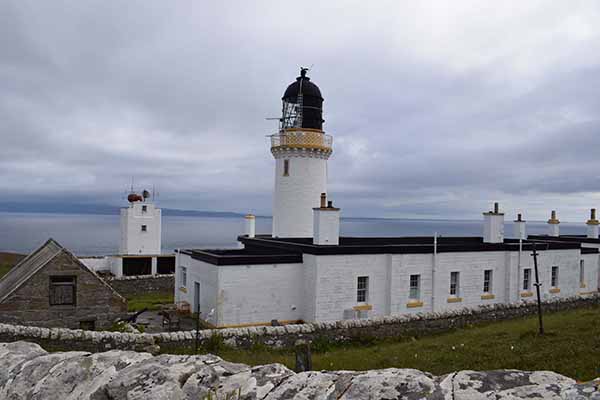 Dunnet Head is actually the most northerly point in the mainland UK and standing 300ft (91m) above sea level you really are left with the feeling you are standing on the edge of the world, not to mention some stunning views, although if you suffer from vertigo you are advised to stand well back from the edge. However if you do venture to the edge you can get a good view of the breeding seabirds, including iconic puffins.
The head is reached via a single track road from the nearby town of Dunnet. There is a natural history visitor centre and ranger led walks are available some afternoons. In the village itself there is a former croft now open as a museum to show how life was for a crofter.
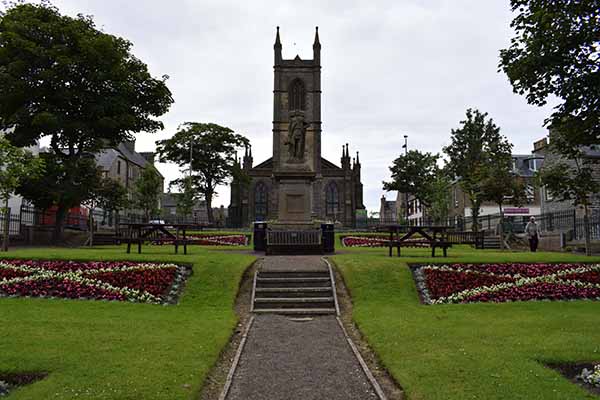 Thurso is the largest town on the north coast of Scotland and it is a town which has changed dramatically since the 1950's as a nuclear power station was opened at nearby Dounreay. As a result modern housing estates have appeared around the eastern side of the town, although the recent decommissioning of the power station calls into question the towns future. The western side is relatively unspoiled by recent developments and a cluster of restored fishermen's cottages overlooks the harbour. There is a folk museum in the town and Thurso is home to the only heated indoor swimming pool in northern Scotland (well one that is open to the public anyway).
Sandyside Bay is a sandy cove near to the Dounraey power station and home to another of those delightful small Scottish harbours. There aren't any facilities there, apart from some public toilets but it's a place for a quiet day on a golden sandy beach, as long as you bring a picnic.
Strathy is a small, scattered hamlet with little to offer, except some breathtaking views from the nearby cliffs at Strathy Point. On a clear day you can see from Cape Wrath to Dunnet Head, plus the Orkney islands. There is a lighthouse here, which is open most afternoons.
Bettyhill came about as a result of the Highland Clearances, the story of which is told in the former 18th century church, now a museum. Nearby is Farr Bay an expanse of golden sand, which can actually hurt your eyes in bright sunshine. Really colourful rocks can be found in the area as well as some semi-precious gems.
In an otherwise bleak, open landscape the woods around Tongue come as a pleasant surprise. The town is set back from the sea but it makes a good base for exploring the woodland areas, lounging on the nearby sandy beaches or fishing at nearby Loch Loyal.
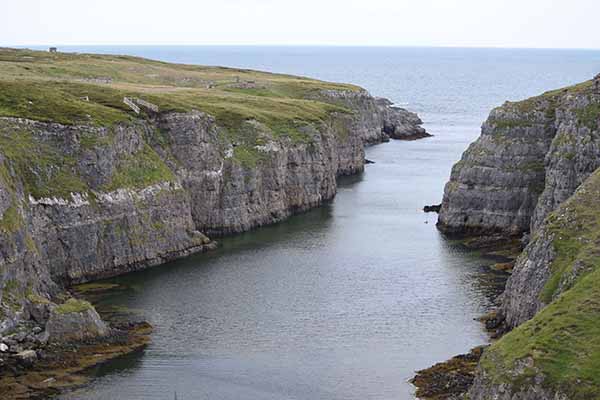 Durness is a small, crofting village with a small visitor centre. Just east of the village is Smoo Cave, accessed by a curving flight of steps then some stepping stones. There is a wooden bridge to a second chamber where the Alt Smoo burn falls from 80ft (24m) above. There is a third chamber but it is barely accessible by foot, although it can be accessed by boat in the summer.
There is a grave in Balnakeil church decorated with a skull and crossbones, containing the mortal remains of one Donald MacLeod a highwayman responsible for, it is believed, at least 18 murders. Fearing any grave would be desecrated he paid the then substantial sum of £1,000 to be buried in this quiet, isolated church. The isolation of the town led to the building of a now defunct "early warning station" for the military and many of the buildings have been turned into Balnakeil Craft Village.
Cape Wrath forms the north-western most corner of the mainland and is home to the highest cliffs on the British mainland at 920ft (280m) high. Access is via a ferry from the Kyle Of Durness although in the summer a minibus takes visitors down a 10 mile track to the cape. The reason for the restriction is the area is used as a military firing range.
Kinlochbervie is larger than most of the towns in the area and this is down to it being the home of the north western fishing fleet and it is home to a massive double harbour. Either side of the town are sandy coves, ideal for bathing.
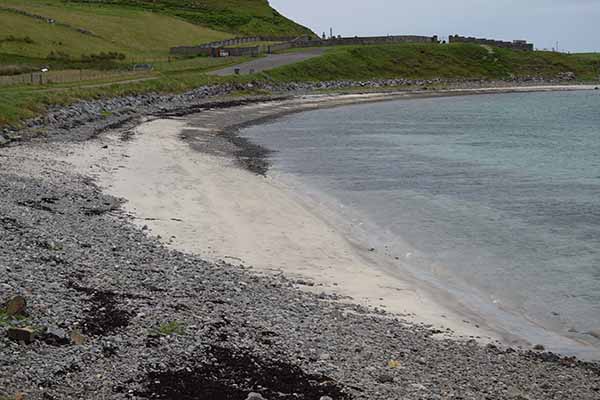 Scourie is probably the nearest you get to a resort in this part of the country. Although there is a sandy beach it is fishing and bird watching which attracts most visitors and a community bird hide overlooks the bay.
A narrow road follows the spectacular coastline of the Assynt Peninsular with Lochinver, the largest town in the area an absolute gem. The busy harbour has boats from as far away as France landing their catches and the town is a hive of activity when the fleet is in port and visitors can purchase fresh fish at the evening fish market. When the fleet is out a relaxed atmosphere prevails and the town has plenty of craft shops and a pottery. A few miles inland is Britain's second largest nature reserve, the Inverpolly National Nature Reserve with almost 27,000 acre of mainly uninhabited wilderness. The park centre at Knockan is a good place to begin exploring as they have details of many trails for all abilities.
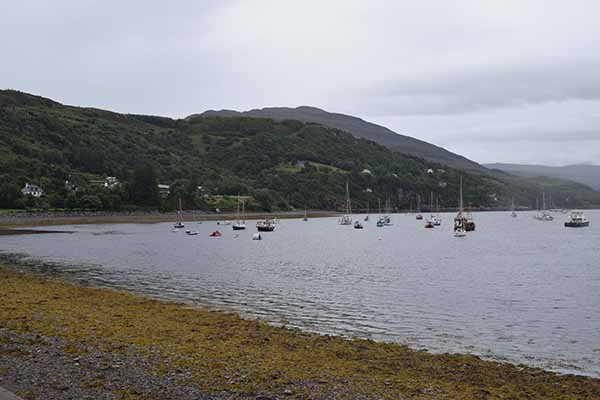 Driving the coastal road from Lochinver to Ullapool will take your breath away not only with the stunning and varied scenery but also the ferocity of of the bends. Reaching Ullapool will be a relief. Ullapool will feel at home for residents of Milton Keynes as it was a purpose built down designed on a grid pattern as the town was built as a herring port in 1778. Within a 100 years the fish had been overfished and the herring bubble burst. Many of the original buildings still remain and it is still a busy fishing port, although on a much smaller scale. Eastern European factory ship often moor in the sea loch to purchase the local catch. There are ferry links to many of the islands and there are plenty of pleasure cruises to some of the smaller islands in the summer months.
Gruinard Bay, (nothing to do with The Guardian) with its pink sandy coves, formed of red sandstone, is one of the most picturesque bays on the north-west coast. It is not unusual to see porpoises swimming in the bay.
Loch Ewe is at the same latitude as Labrador and Leningrad yet Inverewe Gardens, on its shore are a feast of subtropical colour throughout the year. The garden was created out of bare rock and a few scrub willows in 1862 by Osgood Mackenzie and is full of colourful, exotic plants from around the world. The garden is open all year with the visitor centre open April - October. Admission Adult £16.00 , Child £9.60. Family £43.00, One Parent Family £29.50, Concessions £7.50 Free for National trust Scotland Members
Poolewe, just down the road from the gardens is a small village and home to a small river, just two miles long.
Gairloch was once a fishing port but that has dwindled and is now a tourist hot spot, not surprisingly as the area is home to some of the most stunning scenery in the West Highlands. A safe cove offers swimming and windsurfing and both sea and coarse anglers are more than catered for.
This area is generally known as Wester Ross and is one of the most scenic areas of the country - some of the prettiest routes are basically roads to nowhere - for example the road to Red Point is basically a nine mile long cul-de-sac but well worth the drive.
Sheildaig is nothing more than a large, one street, village but is well worth a stop with several places to grab a meal or just chill for an hour.
The area is also home to some pretty lochs, Loch Maree being a prime example along with the nearby Victoria Falls.
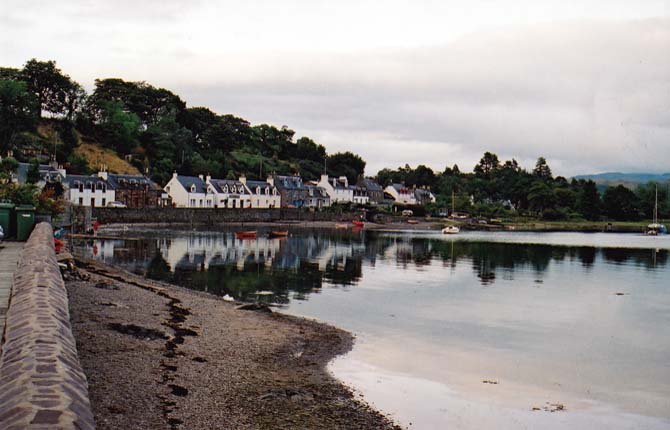 If you ever saw the popular TV series Hamish McBeth then Plockton may seem strangely familiar which isn't surprising as it was one of the locations used to film the series. What may be a surprise is the Mediterranean feel to the place as palm trees line the shore, courtesy of the mild climate from the North Atlantic Drift. Also don't be surprised if you stroll down the High Street and come face to face with some Highland Cattle. A delightful town, Plockton is very popular with artists.
Kyle Of Lochalsh used to be where you would catch the ferry to the Isle Of Skye, now it's simply the last town on the mainland before the Skye Bridge, which is a shame as it means many will miss the delights of this most pleasant town.
Eilean Donan Castle is probably the most photographed castle in Scotland, even more so than Edinburgh. Built in the 13th century on a rocky islet where three lochs meet, it has the appearance of a fairytale castle. The castle is open to the public from February to 22nd December. Admission Adult £13.00, Concessions £12.00, Family £38.00 and Child £6.50, under 5's free,
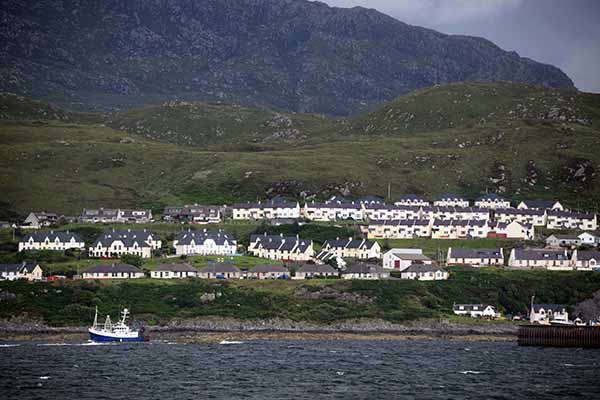 Mallaig is a busy fishing port at the end of the West Highland Railway. With dramatic hills behind and views across the Sound Of Sleat ahead it is a lovely place to visit. With ferries to many of the larger island and day trips to other, smaller, islands in the summer it is a good base to explore the area. If your feeling fit, you have some hiking boots and the weather is playing ball then a climb up the Carn á Ghobhair will be worthwhile as the 1,797ft (548m) offers absolutely stunning views of the Highlands. However the town is at the end of one of those long roads to nowhere and it's questionable as to whether it's worth a visit in its own right - it is more a town to use as a stepping stone to some of the islands.
The area, known in those days as Inverlochy, was one of Oliver Cromwell's northernmost strongholds, it was renamed Fort William in honour of William III. Now a busy tourist centre it is a base for those wanting to visit Ben Nevis, the highest point in Britain, just four miles away. The town is a full blown tourist trap and comes as something of a shock in contrast to the quietness and remoteness of the rest of the Highlands. Personally I don't like the town but I don't do crowds.
Connel a place you could easily pass by were it not for the lovely Falls Of Lora, although more of rapids than a fall, which passes under the bridge on the road to Fort William.
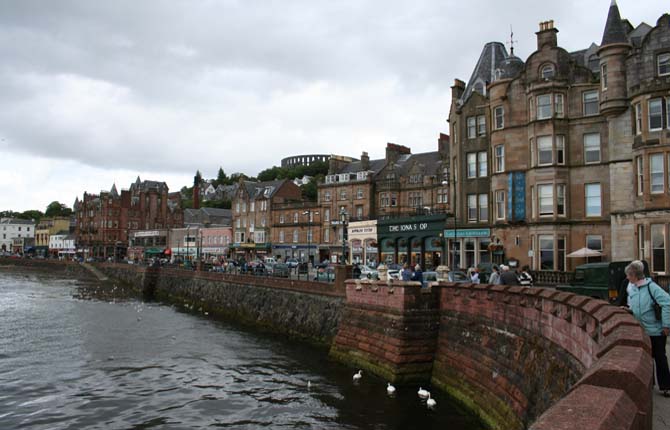 Oban has an eclectic mix of odd architectural styles from a railway station, probably unique throughout the network, through to an unfinished shell of a spa that never was, not forgetting a tower with more than a passing resemblance to the Coliseum in Rome. Oban is another of those towns which owes it prosperity to the railway as travellers were able to step from the eccentric station onto ferries to the islands as they still can do today. August sees the Argyllshire Gathering, a traditional highland games. The nearby Oban Malt Distillery offers tours and the Oban Rare Breeds Farm Park has animals no longer seen on modern farms.
Probably made more famous by the Wings song, the Kintyre peninsular is the closest part of the mainland to the island of Ireland, just 12 miles from the Antrim coast at its closest. A steep, twisting seven mile drive will take you through some stunning scenery and you will end up in Southend, a total contrast to its Essex namesake. This version has no "kiss me quick" distractions but it has a small beach and some caves. However all along the coastline you will find stunning vistas.
Tarbet, at the sea end of Loch Fyne, is still a bustling port, although nowadays yachts and pleasure craft share the harbour with fishermen. the fish quay is still busy but the town is more of a resort with even the odd occasional travelling fair appearing in the summer months. The town is home to a big sailing regatta, Scotland's largest, each May.
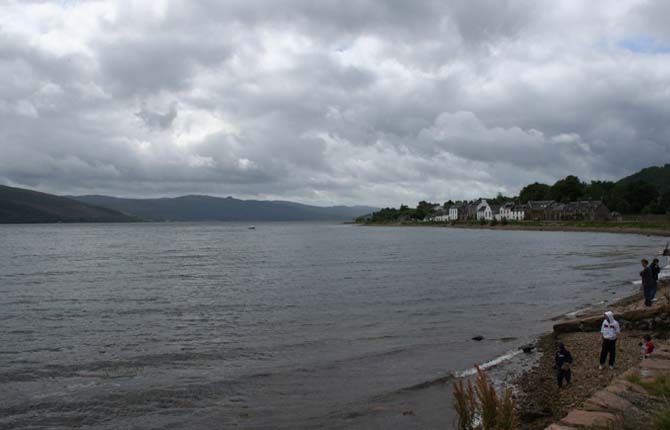 Towards the top end of Loch Fyne is Inveraray, built in the 18th century the same time as the castle, which is home to head of the Campbell clan. The old Inveraray jail houses a museum of crime and punishment, whilst nearby is a schooner which has been converted into a maritime museum. Admission Adults £16.50, Child £10.00, Senior / Student £14.50. There is also an escape room experience with prices starting at £70 for two people.
Tighnabruaich is a small village surrounded by a spectacular mountains, offering grand views of the Isle of Bute. The village makes no concession to those looking for amusement arcades, concentrating instead on the needs of the sailing fraternity.
Dunoon hosts the Cowal Highland Gathering every August. Summer cruises to and round the islands are available, and anglers, walkers and golfers are all catered for.
Loch Eck is, arguably, one of the greatest inland waterways in Scotland. Seasonal cruises are available. To the north there are oak and conifer plantations leading past waterfalls, whilst to the south giant redwoods feature in the Younger Botanic Garden. Nearby a series of footpaths and bridges allow you to ascend the 820ft (250m) high Puck's Glen.
South the bottom end of the Loch are Benmore Gardens, set on a hillside and if you feel energetic the climb to the top of the gardens will be rewarded with spectacular views. If climbing hills is not possible there are plenty of flatter walks through the gardens. Admission Adults £12.00, Consessions £10.00, Children (under 15) Free
Loch Goil spreads fjord-like through the countryside and at the top end can be found Drimsynie, a holiday village, including a leisure centre open to visitors. A forest path leads north, via a mossy glen, to Rob Roy's Cave, said to be a hiding place of the 18th century rebel.
Dumbarton has a long and distinguished history and is the most historic strongholds in Britain. Set atop an unstormable crag and close to the lowest fordable point of the River Clyde. There have been castles here since the 6th century with the current incarnation dating from the 18th century. Dumbarton played a major part in the life of Mary Queen Of Scots. Shipbuilding was the main industry, part of the story told at the towns Denny's Ship Model experimentation Tank. Nowadays distilling is the main trade in the town.
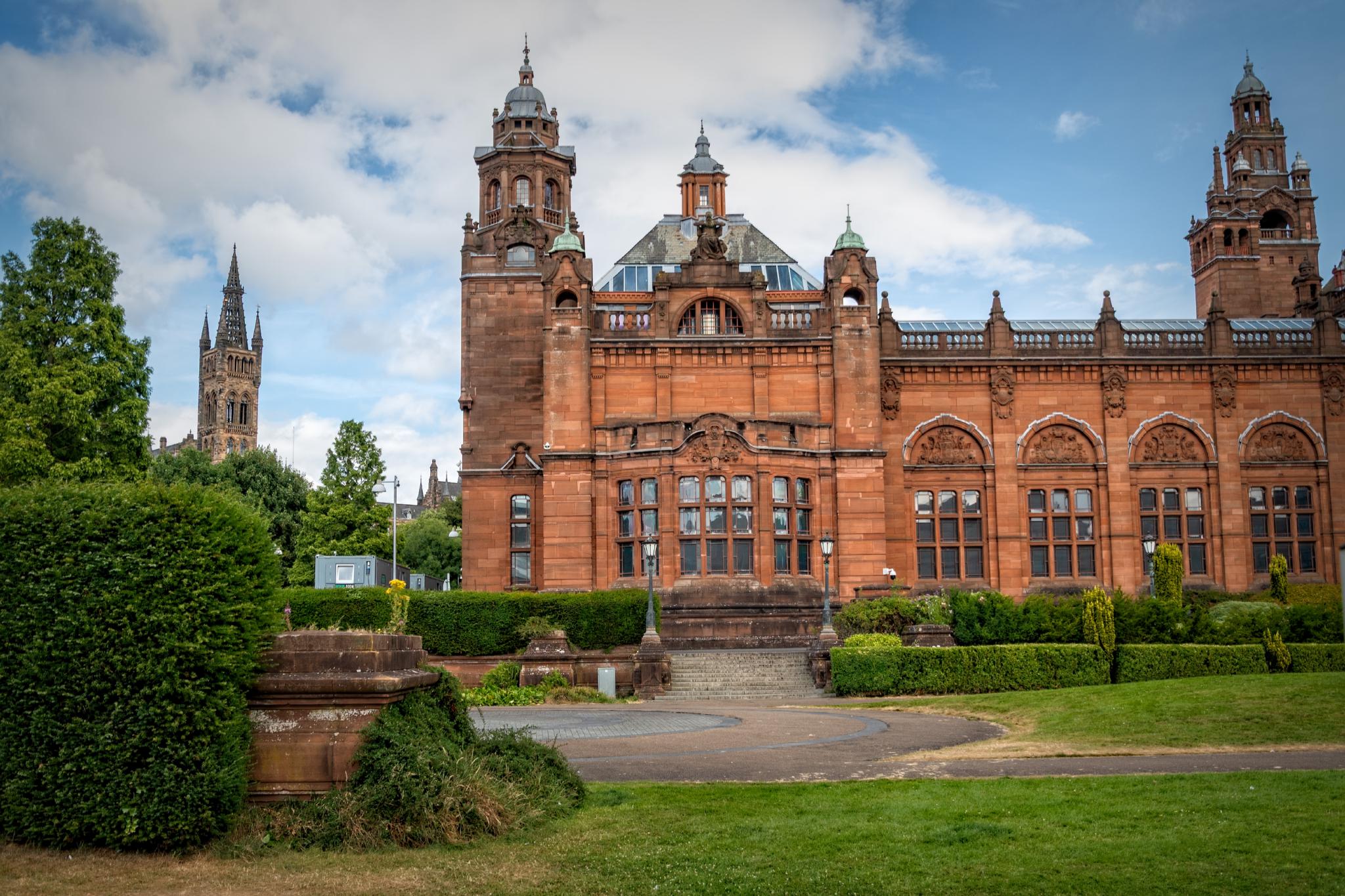 Glasgow is Scotland's second city with many attractions to occupy most visitors.
Port Glasgow, as its name implies, was built to be the port of the city of Glasgow but subsequent dredging meant the port was finally located in the main city. It did fulfill the role of being Glasgow's port until around 1700. Just one shipyard remains in what is, in truth, a rather drab town.
Between the 17th and 19th centuries Greenock was at the heart of the Industrial Revolution. The town was the birthplace of James Watt, the discoverer of steam power. Few buildings from the halcyon days of the town remain following a savage two night blitz of the town in 1941. The Watt Library tells the story of Watt and the McLean Art Gallery tells the wider history of the town.
Wemyss Bay has long been where Glaswegians escape to enjoy the delights of the seaside. Pronounces "weems" it used to be a departure point for excursions on paddle steamers, alas the steamers are no more, apart from the occasional visit from Waverley. The listed Edwardian railway station and pier are both worth exploring.
Largs is a more "traditional" resort with a promenade, shell-fish stalls, boat trips and a funfair. A sheltered bay makes the town popular with the sailing fraternity, with major regattas held in May and September. Less well know is the history of the town goes back to Viking times, as explained at The Vikingar and a festival every September,
Before the Clyde was fully opened Irvine was the main port for Glasgow. With close associations with Robert Burns there is a Burns Museum and the towns Burns Club is amongst the oldest. There is a Maritime Museum at the Eastern Harbour. Nowadays Irvine is a resort with some activities for everyone from an indoor curling rink to innumerable waters sports and, for the very brave, sand surfing.
Troon is a magnet for golfers with no fewer than six courses the most famous being Royal Troon, occasional host to The Open. The old harbour is now a large marina and the South Beach is a good place to walk or relax. There is a seasonal ferry service to Larne in Northern Ireland.
Prestwick is a delightful town and the oldest burgh in Scotland being granted its status in 987AD. Like many towns on this stretch of the coast it offers world class golfing facilities. The International Airport has probably seen better days but it can still be a stopping off point for trans-Atlantic flights.
Ayr is the main resort on this stretch of coastline. It was once the major port but now the harbour is a shadow of its former self and it is the two miles of sandy beaches which have become the towns main attraction. Ayr racecourse stages generally run of the mill racing but does have two big meetings a year the two day Scottish Grand National meeting in mid-April and the three day western Meeting over the flat in September.
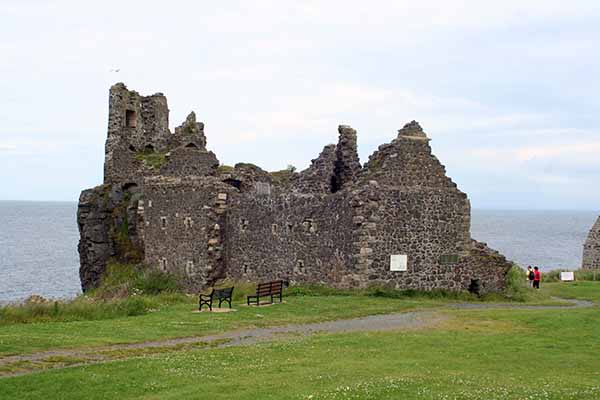 At first glance there isn't much to Dunure but above the tiny harbour there are the remains of Dunure Castle. Dunure is said to be where Robert Bruce ended his exile from Ireland.
A couple of miles inland is the Electric Brae, which can really freak you out. At first glance, Croy Brae, to give it its official name, looks like any other stretch of road, but it isn't. Pull up, put your car in neutral, turn your hazard lights on and release your handbrake. Your vehicle will look and feel as though it is rolling uphill and defying gravity. In truth there is no trickery or magnetism involved - it's simply an optical illusion caused by the layout of the land either side of the road.
Turnberry has a mile and a half of silver sands but like many towns in this area it's golf that is the main attraction. On a clear day the Isle Of Arran, 14 miles away, can be seen.
Girvan is a delight for Old Moaners with a quaint, still active, fishing harbour as well as several floral gardens and a relatively quiet, mile long beach.
Sheltered at the top end of Loch Ryan Stranrear became, in 1872, the destination for the main ferry route to Northern Ireland, with ferry services to Larne and Belfast.
The Mull Of Galloway is the southernmost tip of Scotland, guarding the entrance to the Solway Firth. A narrow road leads to the lighthouse which offers spectacular views taking in Ireland, the Isle Of Man, the Lake District and, on a clear day, the tops of the Inner Hebridean peaks. The cliffs are an RSPB Reserve.
Like Ivervewe Gardens further north, Logan Botanic Gardens are an unexpected sub-tropical oasis in an otherwise desolate area. A combination of the North Atlantic Drift and some strategically placed walls means plants from all over the world thrive here. Open mid-March - October. Admission Adults £12.00, Consessions £10.00, Children (under 15) Free.
Wigtown has extensive mudflats which serve as a breeding ground for lapwings, curlews and terns every summer. A royal burgh since 1292 the town has a spacious town square, so large it houses a bowling green. The harbour silted up long ago but it has been renovated to provide quays, parking and picnic areas.
Creetown, once a busy port, is now a site for private craft. The main export from the town was granite and the granite clock tower, built to commemorate Queen Victoria's Diamond Jubilee in 1897 shows the export at its very best. There is an interesting Gem Rock Museum in the town.
Gatehouse Of Fleet is a purpose built town, constructed to house workers in the towns cotton mills in the late 18th century. The story of cotton in the town is told at the Mill on the Fleet Heritage Centre.
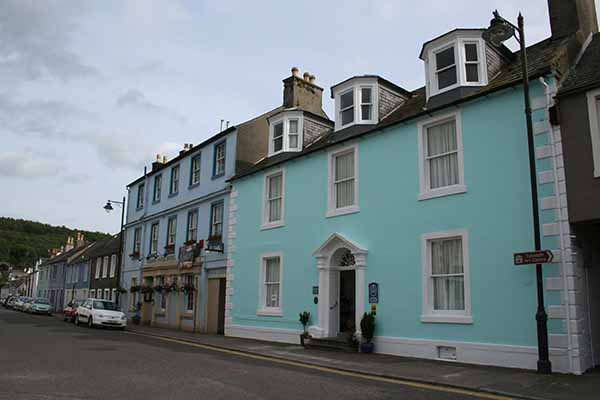 Kirkcudbright (pronounced "Kirkoobree") is a fishing port specialising in small scallops known as Kirkcudbright Queenies. There are some delightful buildings in the town, some painted in soft pastel colours and it is not surprising to note the town is popular with artists.
Gretna is more renown for the neighbouring Gretna Green where young couples used to elope from England without parental consent. Very much a tourist trap to exploit this history and exploit it it really does. If you must have a shopping fix then the Gretna Outlet Centre is a must visit place.
Previous: Eyemouth - John O'Groats Next: Silloth - Hoylake
Dunnet Head is actually the most northerly point in the mainland UK and standing 300ft (91m) above sea level you really are left with the feeling you are standing on the edge of the world, not to mention some stunning views, although if you suffer from vertigo you are advised to stand well back from the edge. However if you do venture to the edge you can get a good view of the breeding seabirds, including iconic puffins.The head is reached via a single track road from the nearby town of Dunnet. There is a natural history visitor centre and ranger led walks are available some afternoons. In the village itself there is a former croft now open as a museum to show how life was for a crofter.
Thurso is the largest town on the north coast of Scotland and it is a town which has changed dramatically since the 1950's as a nuclear power station was opened at nearby Dounreay. As a result modern housing estates have appeared around the eastern side of the town, although the recent decommissioning of the power station calls into question the towns future. The western side is relatively unspoiled by recent developments and a cluster of restored fishermen's cottages overlooks the harbour. There is a folk museum in the town and Thurso is home to the only heated indoor swimming pool in northern Scotland (well one that is open to the public anyway).Sandyside Bay is a sandy cove near to the Dounraey power station and home to another of those delightful small Scottish harbours. There aren't any facilities there, apart from some public toilets but it's a place for a quiet day on a golden sandy beach, as long as you bring a picnic.
Strathy is a small, scattered hamlet with little to offer, except some breathtaking views from the nearby cliffs at Strathy Point. On a clear day you can see from Cape Wrath to Dunnet Head, plus the Orkney islands. There is a lighthouse here, which is open most afternoons.
Bettyhill came about as a result of the Highland Clearances, the story of which is told in the former 18th century church, now a museum. Nearby is Farr Bay an expanse of golden sand, which can actually hurt your eyes in bright sunshine. Really colourful rocks can be found in the area as well as some semi-precious gems.
In an otherwise bleak, open landscape the woods around Tongue come as a pleasant surprise. The town is set back from the sea but it makes a good base for exploring the woodland areas, lounging on the nearby sandy beaches or fishing at nearby Loch Loyal.
Durness is a small, crofting village with a small visitor centre. Just east of the village is Smoo Cave, accessed by a curving flight of steps then some stepping stones. There is a wooden bridge to a second chamber where the Alt Smoo burn falls from 80ft (24m) above. There is a third chamber but it is barely accessible by foot, although it can be accessed by boat in the summer.There is a grave in Balnakeil church decorated with a skull and crossbones, containing the mortal remains of one Donald MacLeod a highwayman responsible for, it is believed, at least 18 murders. Fearing any grave would be desecrated he paid the then substantial sum of £1,000 to be buried in this quiet, isolated church. The isolation of the town led to the building of a now defunct "early warning station" for the military and many of the buildings have been turned into Balnakeil Craft Village.
Cape Wrath forms the north-western most corner of the mainland and is home to the highest cliffs on the British mainland at 920ft (280m) high. Access is via a ferry from the Kyle Of Durness although in the summer a minibus takes visitors down a 10 mile track to the cape. The reason for the restriction is the area is used as a military firing range.
Kinlochbervie is larger than most of the towns in the area and this is down to it being the home of the north western fishing fleet and it is home to a massive double harbour. Either side of the town are sandy coves, ideal for bathing.
Scourie is probably the nearest you get to a resort in this part of the country. Although there is a sandy beach it is fishing and bird watching which attracts most visitors and a community bird hide overlooks the bay.A narrow road follows the spectacular coastline of the Assynt Peninsular with Lochinver, the largest town in the area an absolute gem. The busy harbour has boats from as far away as France landing their catches and the town is a hive of activity when the fleet is in port and visitors can purchase fresh fish at the evening fish market. When the fleet is out a relaxed atmosphere prevails and the town has plenty of craft shops and a pottery. A few miles inland is Britain's second largest nature reserve, the Inverpolly National Nature Reserve with almost 27,000 acre of mainly uninhabited wilderness. The park centre at Knockan is a good place to begin exploring as they have details of many trails for all abilities.
Driving the coastal road from Lochinver to Ullapool will take your breath away not only with the stunning and varied scenery but also the ferocity of of the bends. Reaching Ullapool will be a relief. Ullapool will feel at home for residents of Milton Keynes as it was a purpose built down designed on a grid pattern as the town was built as a herring port in 1778. Within a 100 years the fish had been overfished and the herring bubble burst. Many of the original buildings still remain and it is still a busy fishing port, although on a much smaller scale. Eastern European factory ship often moor in the sea loch to purchase the local catch. There are ferry links to many of the islands and there are plenty of pleasure cruises to some of the smaller islands in the summer months.Gruinard Bay, (nothing to do with The Guardian) with its pink sandy coves, formed of red sandstone, is one of the most picturesque bays on the north-west coast. It is not unusual to see porpoises swimming in the bay.
Loch Ewe is at the same latitude as Labrador and Leningrad yet Inverewe Gardens, on its shore are a feast of subtropical colour throughout the year. The garden was created out of bare rock and a few scrub willows in 1862 by Osgood Mackenzie and is full of colourful, exotic plants from around the world. The garden is open all year with the visitor centre open April - October. Admission Adult £16.00 , Child £9.60. Family £43.00, One Parent Family £29.50, Concessions £7.50 Free for National trust Scotland Members
Poolewe, just down the road from the gardens is a small village and home to a small river, just two miles long.
Gairloch was once a fishing port but that has dwindled and is now a tourist hot spot, not surprisingly as the area is home to some of the most stunning scenery in the West Highlands. A safe cove offers swimming and windsurfing and both sea and coarse anglers are more than catered for.
This area is generally known as Wester Ross and is one of the most scenic areas of the country - some of the prettiest routes are basically roads to nowhere - for example the road to Red Point is basically a nine mile long cul-de-sac but well worth the drive.
Sheildaig is nothing more than a large, one street, village but is well worth a stop with several places to grab a meal or just chill for an hour.
The area is also home to some pretty lochs, Loch Maree being a prime example along with the nearby Victoria Falls.
If you ever saw the popular TV series Hamish McBeth then Plockton may seem strangely familiar which isn't surprising as it was one of the locations used to film the series. What may be a surprise is the Mediterranean feel to the place as palm trees line the shore, courtesy of the mild climate from the North Atlantic Drift. Also don't be surprised if you stroll down the High Street and come face to face with some Highland Cattle. A delightful town, Plockton is very popular with artists.Kyle Of Lochalsh used to be where you would catch the ferry to the Isle Of Skye, now it's simply the last town on the mainland before the Skye Bridge, which is a shame as it means many will miss the delights of this most pleasant town.
Eilean Donan Castle is probably the most photographed castle in Scotland, even more so than Edinburgh. Built in the 13th century on a rocky islet where three lochs meet, it has the appearance of a fairytale castle. The castle is open to the public from February to 22nd December. Admission Adult £13.00, Concessions £12.00, Family £38.00 and Child £6.50, under 5's free,
Mallaig is a busy fishing port at the end of the West Highland Railway. With dramatic hills behind and views across the Sound Of Sleat ahead it is a lovely place to visit. With ferries to many of the larger island and day trips to other, smaller, islands in the summer it is a good base to explore the area. If your feeling fit, you have some hiking boots and the weather is playing ball then a climb up the Carn á Ghobhair will be worthwhile as the 1,797ft (548m) offers absolutely stunning views of the Highlands. However the town is at the end of one of those long roads to nowhere and it's questionable as to whether it's worth a visit in its own right - it is more a town to use as a stepping stone to some of the islands.The area, known in those days as Inverlochy, was one of Oliver Cromwell's northernmost strongholds, it was renamed Fort William in honour of William III. Now a busy tourist centre it is a base for those wanting to visit Ben Nevis, the highest point in Britain, just four miles away. The town is a full blown tourist trap and comes as something of a shock in contrast to the quietness and remoteness of the rest of the Highlands. Personally I don't like the town but I don't do crowds.
Connel a place you could easily pass by were it not for the lovely Falls Of Lora, although more of rapids than a fall, which passes under the bridge on the road to Fort William.
Oban has an eclectic mix of odd architectural styles from a railway station, probably unique throughout the network, through to an unfinished shell of a spa that never was, not forgetting a tower with more than a passing resemblance to the Coliseum in Rome. Oban is another of those towns which owes it prosperity to the railway as travellers were able to step from the eccentric station onto ferries to the islands as they still can do today. August sees the Argyllshire Gathering, a traditional highland games. The nearby Oban Malt Distillery offers tours and the Oban Rare Breeds Farm Park has animals no longer seen on modern farms.Probably made more famous by the Wings song, the Kintyre peninsular is the closest part of the mainland to the island of Ireland, just 12 miles from the Antrim coast at its closest. A steep, twisting seven mile drive will take you through some stunning scenery and you will end up in Southend, a total contrast to its Essex namesake. This version has no "kiss me quick" distractions but it has a small beach and some caves. However all along the coastline you will find stunning vistas.
Tarbet, at the sea end of Loch Fyne, is still a bustling port, although nowadays yachts and pleasure craft share the harbour with fishermen. the fish quay is still busy but the town is more of a resort with even the odd occasional travelling fair appearing in the summer months. The town is home to a big sailing regatta, Scotland's largest, each May.
Towards the top end of Loch Fyne is Inveraray, built in the 18th century the same time as the castle, which is home to head of the Campbell clan. The old Inveraray jail houses a museum of crime and punishment, whilst nearby is a schooner which has been converted into a maritime museum. Admission Adults £16.50, Child £10.00, Senior / Student £14.50. There is also an escape room experience with prices starting at £70 for two people.Tighnabruaich is a small village surrounded by a spectacular mountains, offering grand views of the Isle of Bute. The village makes no concession to those looking for amusement arcades, concentrating instead on the needs of the sailing fraternity.
Dunoon hosts the Cowal Highland Gathering every August. Summer cruises to and round the islands are available, and anglers, walkers and golfers are all catered for.
Loch Eck is, arguably, one of the greatest inland waterways in Scotland. Seasonal cruises are available. To the north there are oak and conifer plantations leading past waterfalls, whilst to the south giant redwoods feature in the Younger Botanic Garden. Nearby a series of footpaths and bridges allow you to ascend the 820ft (250m) high Puck's Glen.
South the bottom end of the Loch are Benmore Gardens, set on a hillside and if you feel energetic the climb to the top of the gardens will be rewarded with spectacular views. If climbing hills is not possible there are plenty of flatter walks through the gardens. Admission Adults £12.00, Consessions £10.00, Children (under 15) Free
Loch Goil spreads fjord-like through the countryside and at the top end can be found Drimsynie, a holiday village, including a leisure centre open to visitors. A forest path leads north, via a mossy glen, to Rob Roy's Cave, said to be a hiding place of the 18th century rebel.
Dumbarton has a long and distinguished history and is the most historic strongholds in Britain. Set atop an unstormable crag and close to the lowest fordable point of the River Clyde. There have been castles here since the 6th century with the current incarnation dating from the 18th century. Dumbarton played a major part in the life of Mary Queen Of Scots. Shipbuilding was the main industry, part of the story told at the towns Denny's Ship Model experimentation Tank. Nowadays distilling is the main trade in the town.
Glasgow is Scotland's second city with many attractions to occupy most visitors.Port Glasgow, as its name implies, was built to be the port of the city of Glasgow but subsequent dredging meant the port was finally located in the main city. It did fulfill the role of being Glasgow's port until around 1700. Just one shipyard remains in what is, in truth, a rather drab town.
Between the 17th and 19th centuries Greenock was at the heart of the Industrial Revolution. The town was the birthplace of James Watt, the discoverer of steam power. Few buildings from the halcyon days of the town remain following a savage two night blitz of the town in 1941. The Watt Library tells the story of Watt and the McLean Art Gallery tells the wider history of the town.
Wemyss Bay has long been where Glaswegians escape to enjoy the delights of the seaside. Pronounces "weems" it used to be a departure point for excursions on paddle steamers, alas the steamers are no more, apart from the occasional visit from Waverley. The listed Edwardian railway station and pier are both worth exploring.
Largs is a more "traditional" resort with a promenade, shell-fish stalls, boat trips and a funfair. A sheltered bay makes the town popular with the sailing fraternity, with major regattas held in May and September. Less well know is the history of the town goes back to Viking times, as explained at The Vikingar and a festival every September,
Before the Clyde was fully opened Irvine was the main port for Glasgow. With close associations with Robert Burns there is a Burns Museum and the towns Burns Club is amongst the oldest. There is a Maritime Museum at the Eastern Harbour. Nowadays Irvine is a resort with some activities for everyone from an indoor curling rink to innumerable waters sports and, for the very brave, sand surfing.
Troon is a magnet for golfers with no fewer than six courses the most famous being Royal Troon, occasional host to The Open. The old harbour is now a large marina and the South Beach is a good place to walk or relax. There is a seasonal ferry service to Larne in Northern Ireland.
Prestwick is a delightful town and the oldest burgh in Scotland being granted its status in 987AD. Like many towns on this stretch of the coast it offers world class golfing facilities. The International Airport has probably seen better days but it can still be a stopping off point for trans-Atlantic flights.
Ayr is the main resort on this stretch of coastline. It was once the major port but now the harbour is a shadow of its former self and it is the two miles of sandy beaches which have become the towns main attraction. Ayr racecourse stages generally run of the mill racing but does have two big meetings a year the two day Scottish Grand National meeting in mid-April and the three day western Meeting over the flat in September.
At first glance there isn't much to Dunure but above the tiny harbour there are the remains of Dunure Castle. Dunure is said to be where Robert Bruce ended his exile from Ireland. A couple of miles inland is the Electric Brae, which can really freak you out. At first glance, Croy Brae, to give it its official name, looks like any other stretch of road, but it isn't. Pull up, put your car in neutral, turn your hazard lights on and release your handbrake. Your vehicle will look and feel as though it is rolling uphill and defying gravity. In truth there is no trickery or magnetism involved - it's simply an optical illusion caused by the layout of the land either side of the road.
Turnberry has a mile and a half of silver sands but like many towns in this area it's golf that is the main attraction. On a clear day the Isle Of Arran, 14 miles away, can be seen.
Girvan is a delight for Old Moaners with a quaint, still active, fishing harbour as well as several floral gardens and a relatively quiet, mile long beach.
Sheltered at the top end of Loch Ryan Stranrear became, in 1872, the destination for the main ferry route to Northern Ireland, with ferry services to Larne and Belfast.
The Mull Of Galloway is the southernmost tip of Scotland, guarding the entrance to the Solway Firth. A narrow road leads to the lighthouse which offers spectacular views taking in Ireland, the Isle Of Man, the Lake District and, on a clear day, the tops of the Inner Hebridean peaks. The cliffs are an RSPB Reserve.
Like Ivervewe Gardens further north, Logan Botanic Gardens are an unexpected sub-tropical oasis in an otherwise desolate area. A combination of the North Atlantic Drift and some strategically placed walls means plants from all over the world thrive here. Open mid-March - October. Admission Adults £12.00, Consessions £10.00, Children (under 15) Free.
Wigtown has extensive mudflats which serve as a breeding ground for lapwings, curlews and terns every summer. A royal burgh since 1292 the town has a spacious town square, so large it houses a bowling green. The harbour silted up long ago but it has been renovated to provide quays, parking and picnic areas.
Creetown, once a busy port, is now a site for private craft. The main export from the town was granite and the granite clock tower, built to commemorate Queen Victoria's Diamond Jubilee in 1897 shows the export at its very best. There is an interesting Gem Rock Museum in the town.
Gatehouse Of Fleet is a purpose built town, constructed to house workers in the towns cotton mills in the late 18th century. The story of cotton in the town is told at the Mill on the Fleet Heritage Centre.
Kirkcudbright (pronounced "Kirkoobree") is a fishing port specialising in small scallops known as Kirkcudbright Queenies. There are some delightful buildings in the town, some painted in soft pastel colours and it is not surprising to note the town is popular with artists. Gretna is more renown for the neighbouring Gretna Green where young couples used to elope from England without parental consent. Very much a tourist trap to exploit this history and exploit it it really does. If you must have a shopping fix then the Gretna Outlet Centre is a must visit place.
Previous: Eyemouth - John O'Groats Next: Silloth - Hoylake