
Norway
Bergen
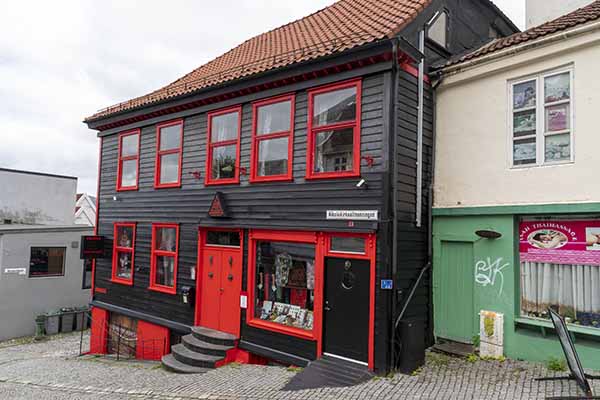 Bryggen will obviously be the star, with its wonderfully wonky row of colourful Hanseatic buildings along the waterfront. Bergen is one of those cities where you can happily wander rather than march from attraction to attraction. The old harbour, narrow streets, fish market and surrounding hills give it a character that many modern cities have managed to lose.
Then there is Bergenhus Fortress, one of Norway's oldest and best-preserved fortifications, and the excellent views from Mount Fløyen. Bergen is also the obvious gateway to the fjords, and that is where the scenery really starts getting ridiculous.
The downside? Bergen is famously wet. Very wet. In fact, the city has such a reputation for rain that you may begin to wonder whether the Norwegians built it here simply because they had too much water left over. Take a waterproof coat, forget the umbrella and get on with it.
Stavanger
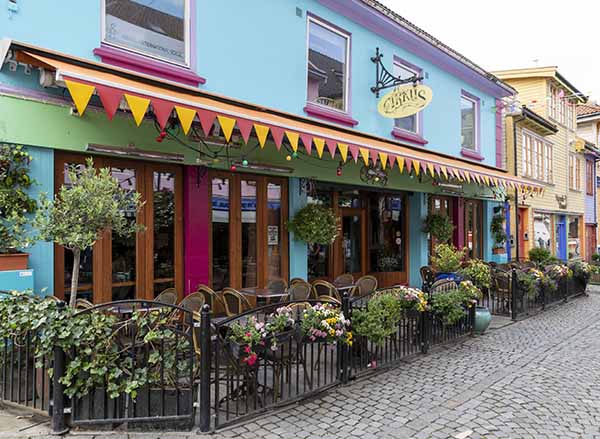 Gamle Stavanger is where Stavanger wins you over. Its collection of little white wooden houses is beautifully preserved and makes wandering around the old streets a pleasure.
Then there is colourful Fargegaten, the famous rainbow-coloured street which has become one of the city's most photographed spots.
Stavanger also has an interesting maritime and industrial history, including the rather excellent Norwegian Petroleum Museum — a reminder that this pretty little city became extremely wealthy thanks to what lies beneath the North Sea.
But Stavanger's real attraction isn't in the city at all. It is the landscape surrounding it, particularly the spectacular Lysefjord and the famous Preikestolen — Pulpit Rock. If Bergen is the gateway to the fjords, Stavanger is where you can get properly close to them.
Flåm
Flåm is tiny, but don't let its size fool you. Tucked away at the end of the Aurlandsfjord, this little village has become one of Norway's most popular tourist stops, and for once the crowds are understandable.
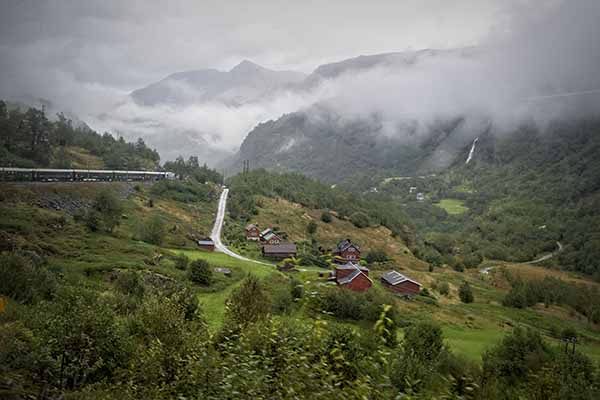 The big attraction is the Flåm Railway, and it is one of the great railway journeys of the world. The line climbs from Flåm, virtually at sea level, up through the spectacular Flåmsdalen valley to Myrdal, rising around 865 metres in just 20 kilometres. It is an extraordinary piece of engineering, with steep gradients, tunnels, waterfalls and mountains seemingly everywhere you look.
The journey is only about an hour, but it packs an astonishing amount of scenery into that time. One of the highlights is the enormous Kjosfossen waterfall, where the train makes a stop so everyone can get out, take photographs and wonder why anyone thought putting a railway through this landscape was a sensible idea in the first place.
At Myrdal you can connect with the main Bergen–Oslo railway, but most visitors simply enjoy the return journey to Flåm. And that's no hardship because you get to see the scenery from a completely different perspective.
Back in Flåm, there isn't an enormous amount to do — and that's rather the point. Wander around the waterfront, admire the mountains, perhaps visit the railway museum and enjoy the setting. The village itself is almost incidental; the scenery and the railway are the stars of the show.
Flåm can get extremely busy when the cruise ships arrive, so if you're there independently, early morning or later in the day is considerably more pleasant. But even with the crowds, it is difficult to complain when you're standing at the end of a fjord surrounded by mountains.
The Flåm Railway is one of those excursions where you can understand the hype. It isn't just a train ride; it is a spectacular journey through some of Norway's finest scenery — and probably one of the few occasions when even someone who isn't particularly interested in trains will be glad they bought a ticket.
Adult Single: From NOK 399 (£31.45) .Child Single (Aged 6–17): 50% of the adult price.Bicycle NOK 280 (£22.00) for bikes, while dogs ride free.Class: There is only one standard class onboard the train. Advanced booking is highly recommended.
Olden
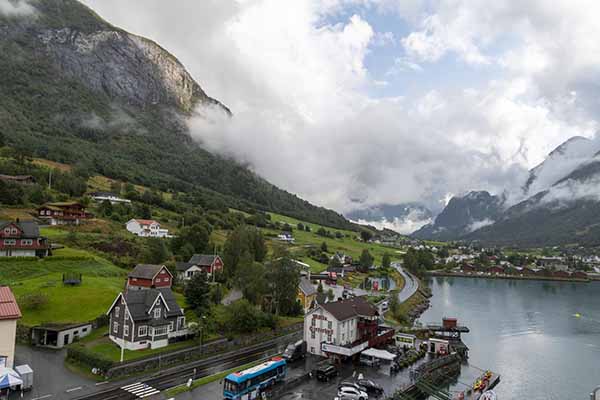 Olden is one of those places where you get off the coach, look around and wonder whether somebody has accidentally parked you in the middle of a movie set.
Sitting at the head of Nordfjord, Olden is surrounded by mountains, waterfalls, glaciers and impossibly blue-green water. It is considerably smaller and quieter than Bergen or Stavanger, and that is precisely its attraction. Olden is essentially nature's playground.
The great excursion from here is to Briksdal Glacier, reached through a spectacular mountain valley. Even if you're not particularly interested in glaciers, the journey is worth doing simply for the scenery.
And then there is Loen.
Loen Skylift
The Loen Skylift is one of those attractions that sounds slightly unnecessary until you actually do it.
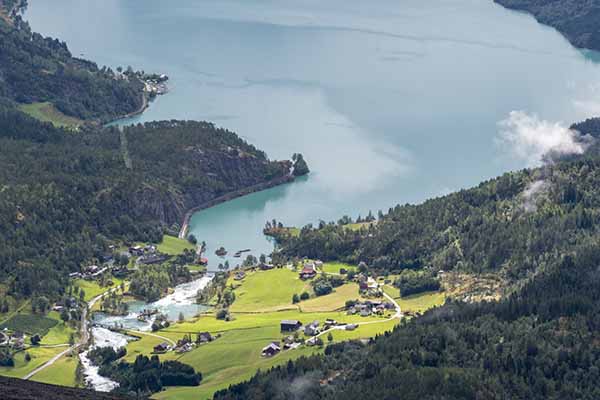 The cable car rises from the fjord to Mount Hoven at 1,011 metres in about five minutes. At the top, you're presented with a panorama of Nordfjord, mountains, valleys and lakes that is almost absurdly beautiful.
And this is the clever bit: you don't have to be a mountaineer to enjoy it. You can simply go up, admire the view, have something to eat and come back down. For those who do fancy getting adventurous, there are walking trails, ziplining and the famous Via Ferrata.
The view from Hoven is quite simply one of the great Norwegian vistas. And unlike climbing a mountain, you can enjoy it without spending half the day discovering muscles you never knew existed.
However, like many things in Norway, it is eye wateringly expensive - but is it worth it - undoubtedly yes.
Loen Skylift ticket prices start around NOK 860 to NOK 960 £63.00 – £70.00) for adults during peak summer season, while children aged 6–15 cost roughly NOK 460 to NOK 490 (£36.00 - £38.50) , and infants under 6 ride for free
The Norwegian Fjords
And now we get to the reason most people come to Norway in the first place.
 The fjords are difficult to describe without sounding like a travel brochure that has swallowed a thesaurus. They are enormous, impossibly steep, remarkably peaceful and utterly spectacular.
Glaciers carved these valleys thousands of years ago, leaving deep fingers of seawater surrounded by mountains that rise almost vertically from the water. Waterfalls tumble down the cliffs, tiny farms cling to seemingly impossible slopes and snow can remain on the higher peaks even when you're enjoying summer sunshine at sea level.
The two great names are Geirangerfjord and Nærøyfjord, both UNESCO World Heritage sites. UNESCO describes them as among the world's longest and deepest fjords and particularly outstanding examples of the classic fjord landscape.
Geirangerfjord is probably the one most people picture when they think of Norway: towering mountains, waterfalls such as the Seven Sisters, tiny settlements and cruise ships looking almost ridiculously small against the landscape.
But don't make the mistake of thinking that those are the only fjords worth seeing. Nordfjord, Sognefjord, Hardangerfjord and Lysefjord all have their own character, and some of the smaller waterways can actually be more enjoyable because they feel less like a tourist attraction and more like somewhere you've stumbled upon by accident.
And that's perhaps the greatest thing about Norway. You don't necessarily need to find the attraction — the scenery is the attraction.
Turn a corner and there's another waterfall. Drive through a tunnel and emerge beside another fjord. Take a ferry and discover another mountain range. Look out of a hotel window and find a glacier staring back at you.
Norway is one of those countries where photographs genuinely don't do it justice.
And for once, Old Moaner may have to admit that nature has got it absolutely spot on.
Prices correct as at August 2026
Return to Europe Home Page