London - Getting Around
Like most major cities London has an extensive public transport network and getting around is easy, although I will always argue getting around on foot is much better as you will find some hidden gems you would otherwise miss.
Any prices quoted are correct as of May 2026
Almost all public transport, including the famous black cabs, come under the auspices of Transport For London (TfL)
Underground (The Tube)
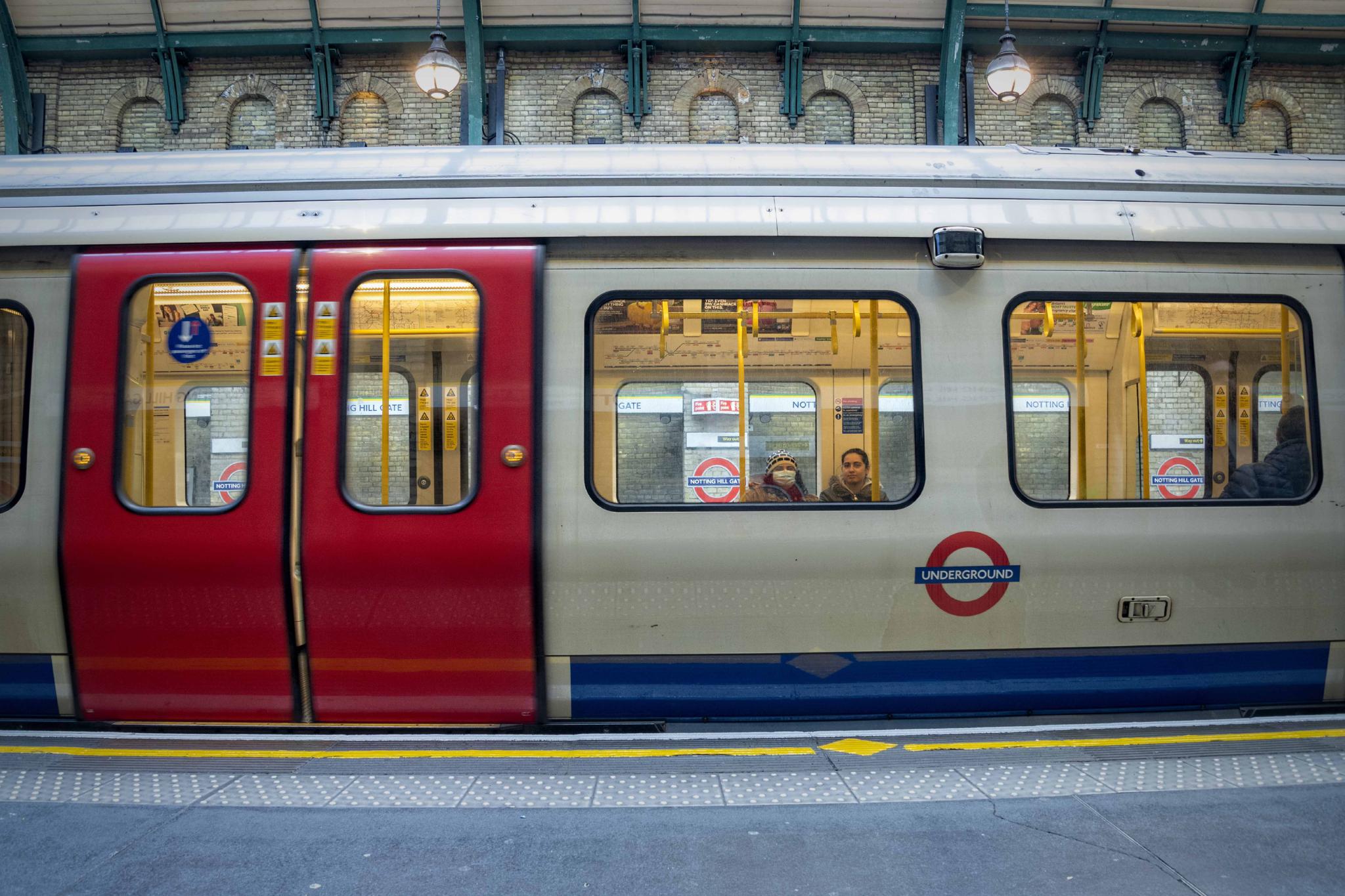 The oldest underground system in the world, the London Underground or Tube, extends throughout the city into the outer suburbs, with 250 miles (402 km) of track, 272 stations and 11 different lines.
The tube operates on a zonal system, but most of the main sites can be found in Zones 1 and 2.
The iconic London tube map makes it easy to find your way around. If you have ever seen the Tokyo or Paris Metro maps then the London Underground map will be an absolute doddle to follow.
The yellow Circle line will cover most of the tourist spots in central London. The red Central line travels from East to West, with many stops along the way, if you want to cross London East - West very quickly then the new, limited stop, Elizabeth Line (purple) is definitely the way to go
As its name implies the District Line (green) reaches out into the outer suburbs mostly in the south and east of the city whilst the Metropolitan (maroon) line covers the northwestern suburbs for those wanting to go north the Northern (black), Bakerloo (brown)and the Piccadilly (dark blue) lines will cover the northern suburbs.
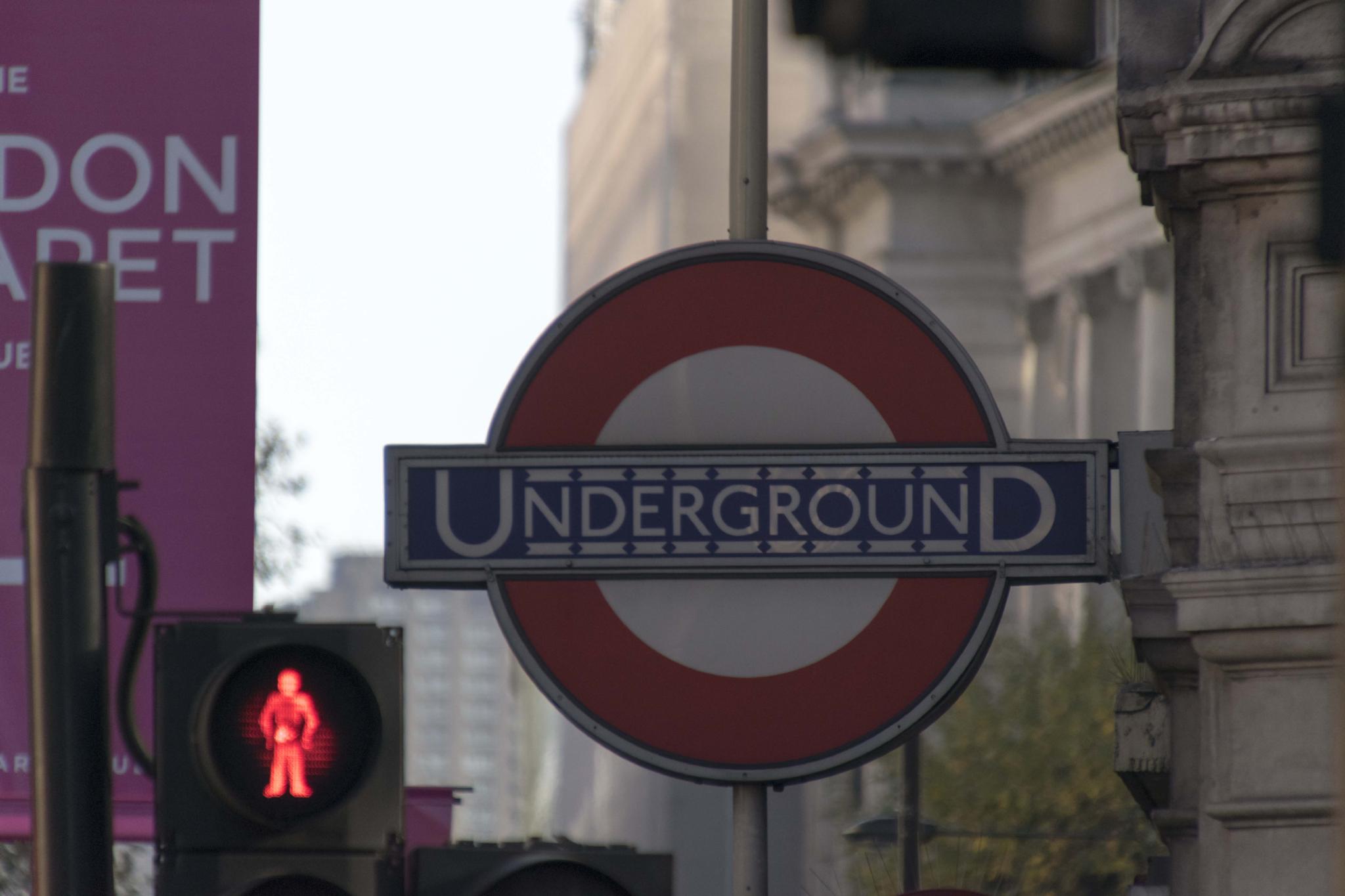 In Central London you're never more than just over half a mile from a tube station, the most "remote" location being the Albert Memorial in Kensington Gardens which is 0.6 miles (1 km) from the nearest tube stations. Underground stations are identified by the iconic TfL roundel.
 If you’re going to be travelling a lot on public transport you’re better off buying a Travelcard, which are available from one, seven or 30 days, Travel cards cover Zones 1-6 . and cost £16.60 for a one day pass.
You are better off paying for your trips individually, then pay for your ride individually, but do not under any circumstance buy a ticket from a ticket office as will cost you a lot more.
The best and most cost efficient way is the use a contactless payment card to tap in and out when you enter and leave a station. This will charge you a lower amount for a single journey and also you will benefit from a daily cap £8.90 for Zones 1 & 2, or a weekly cap of £44.70 (the same cost as a Zone 1 & 2 weekly Travelcard). So if you do more journeys than planned you still won’t be paying the earth as you know how much the maximum payment will be. Just make sure you use the same card for every journey.
Trains run frequently, as often as every two minutes at peak times in central London. However, it can get very congested during rush hours, between 07:30–09:00 and 17:00–19:00 weekdays, for a more comfortable journey, travel between 08:15 and 16:00 or after 17:30 on weekdays. Weekends and Bank Holidays are generally busy but not as crowded as peak midweek rush hours.
Overground
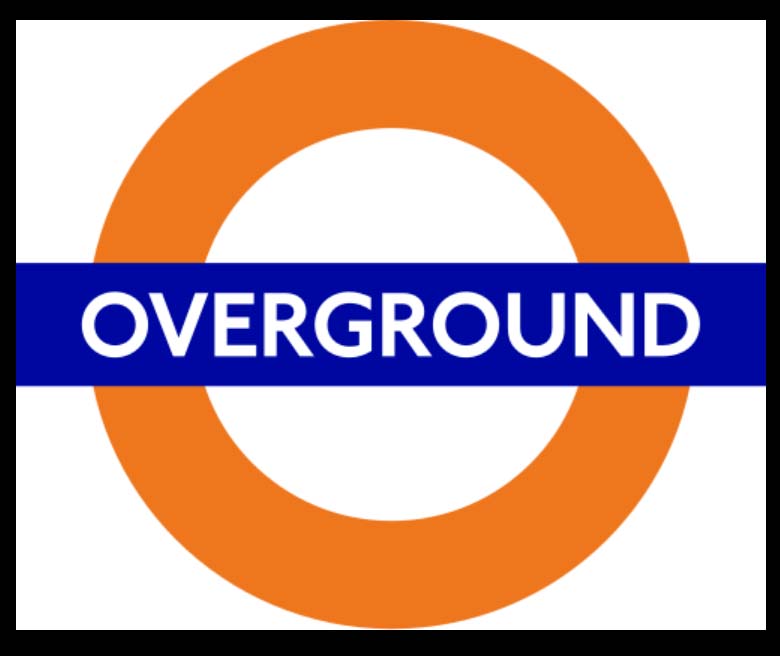 The Overground is a suburban rail network with six lines and serving 113 stations.
The trains were originally operated by National Rail but from 2006 TfL have gradually taken over the network. Until 2004 the network map for the Overground was messy with all lines shown in orange. In 2024 the network was broken down into six distinct lines each with a designated colour, making navigation easier.
The zonal system was expanded to include all the outlying stations on the network, with the exception of Watford Junction, which has a separate fare.
Most of the lines offer four trains an hour, with the exception of the Liberty Line (2 trains an hour) and the Weaver Line (2 trains an hour to Enfield and Cheshunt)
Docklands Light Railway (DLR)
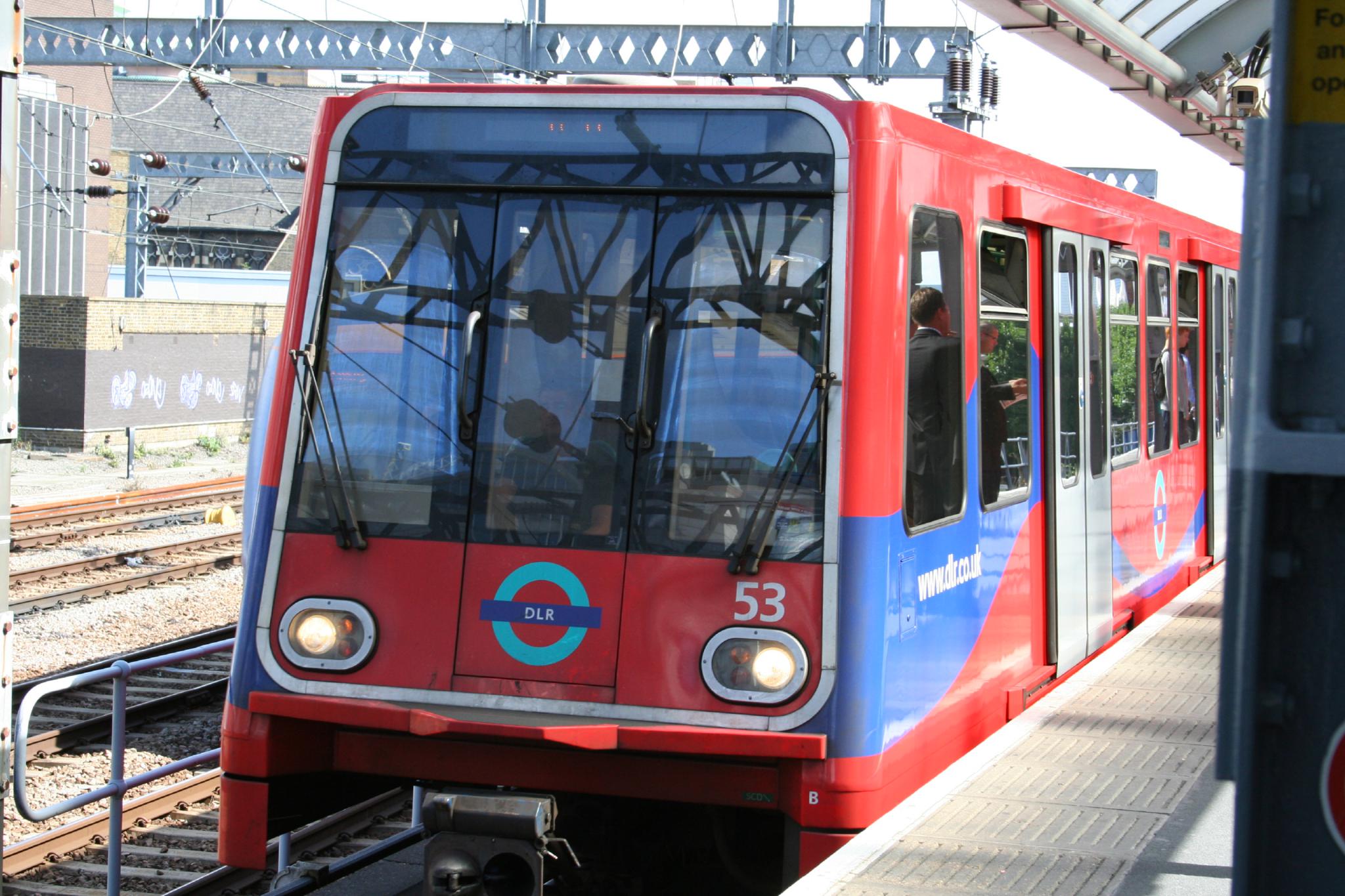 The Docklands Light Railway (DLR) is a driverless, automated light-metro system in East and South-East London. It connects the City of London's financial districts with Canary Wharf, Greenwich, and the Royal Docks. First opened in 1987, the network features 45 stations across 38 km of track.
Operating on the same fare basis as the Underground the DLR offers frequent services across East London.
Bring out your inner child and sit in the front seat to get a "drivers eye" view of your journey. You can often see the disappointment on grown ups faces when they board a DLR train and see the front seat is already occupied.
It also has a station serving London City Airport.
Buses
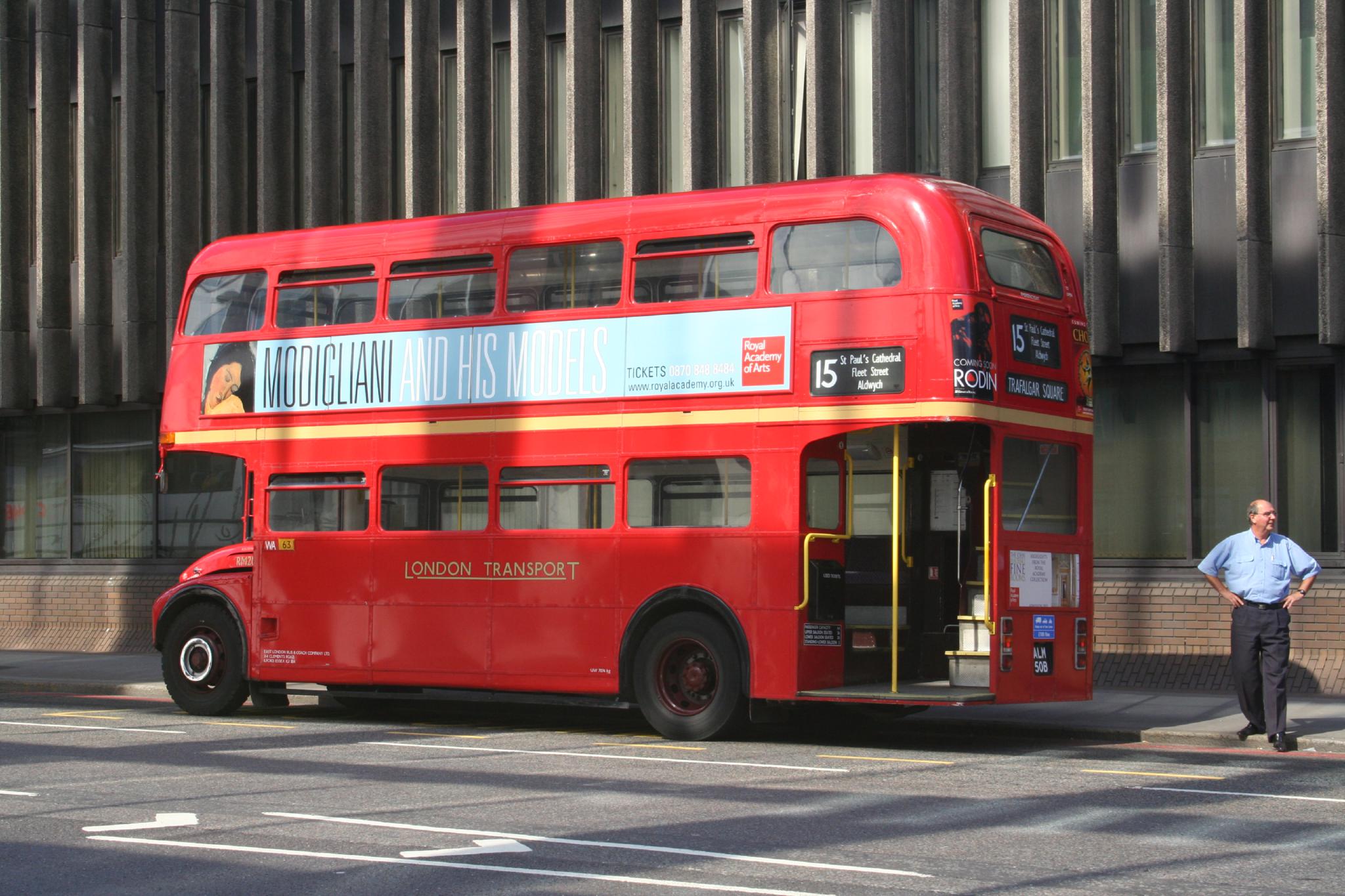 The ubiquitous and iconic red London buses can been seen almost anywhere when you are out and about in London with routes cris crossing the capital, they are a cheap but relatively slow means of travelling around the city.
With a simple flat fare of £1.75 providing an hours travel, including any change of bus during that hour. Payment is by card only, no cash is accepted on London buses. There is a daily cap of £5.25, so if you spend all day travelling on buses it will not break the bank. If you have a Travelcard then bus travel is included.
The old Routemaster buses with the open back step are very much a thing of the past, mainly due to health and safety and pollution reasons. The last regular Routemaster service finished in 1921. Some of the old Routemasters have been purchased by private companies and they offer sightseeing tours, but obviously not at TfL prices. See below for more details.
London also has an extensive night bus network which nowhere near as extensive as the day network, it offers a decent 24 hour service around the city.
Black Cabs
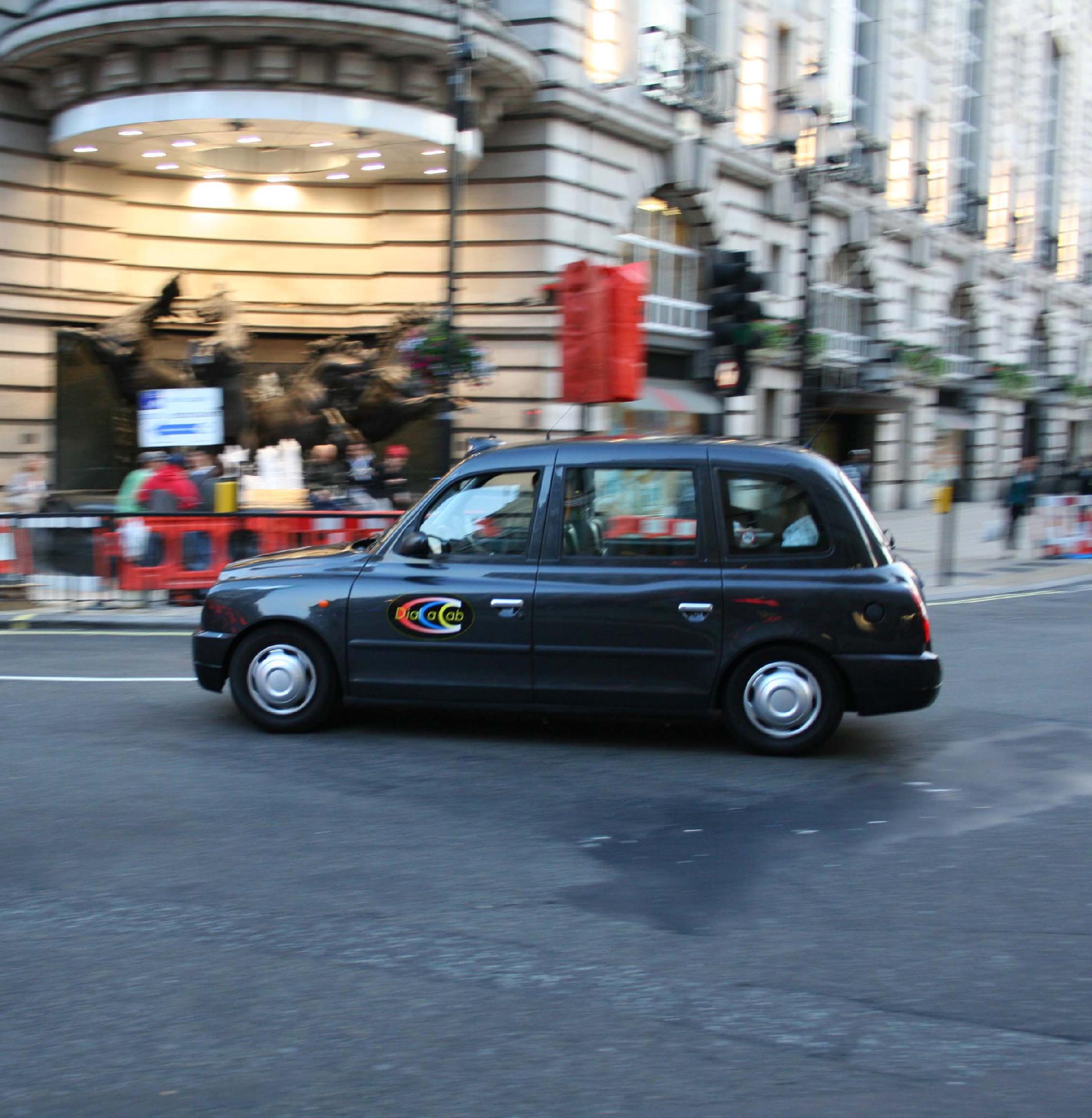 Equally iconic as the red buses are the black cabs, a familiar sight in the capital.
Like most transport in London the cabs are regulated by TfL, who also set the fares to be charged. All trips in black cabs should be on the meter, and unlike many other capital cities you are unlikely to be ripped off by a black cab.
Not Tom, Dick or Harry can become a London black cab driver - they have to pass "The Knowledge".
The Knowledge is the intensive training programme required to become a licensed black-cab driver in London. Trainees must memorise around 25,000 streets and thousands of landmarks, hotels, theatres, hospitals, and routes within a six-mile radius of Charing Cross. Most students travel the city on scooters while studying detailed route maps called “Blue Books.”
The process usually takes between three and four years and involves a series of oral exams known as “appearances,” where candidates must quickly describe the shortest legal route between two points.
Widely regarded as one of the world’s toughest navigation tests, The Knowledge develops exceptional spatial memory and route-planning skills, enabling taxi drivers to navigate London efficiently without relying on satnav systems.
London black cab fares start with a minimum charge of £3.80. Typical journeys cost between £4.00 and £5.12 per mile depending on the time of day and traffic. A standard 2-mile trip usually ranges from £12.60 to £20.20, while a 4-mile ride costs between £21.00 and £31.00.
Journeys starting at Heathrow Airport have an additional surcharge of up to £3.60. All licensed black cabs accept major credit and debit cards without any additional surcharge.
Black cabs are the only Taxi's than can legally be hailed on the street.
Private minicabs are also available for hire and they are also regulated by TfL drivers are vetted but, unlike black cab drivers, they do not have to do The Knowledge. Minicabs have to be booked in advance, must display a TfL licence and must not look like a black cab. Unlike black cabs minicab fares are unregulated and that can set their own charges, By law, minicab operators must provide you with a booking confirmation and the exact fare (or the method by which the fare will be calculated) before your journey begins.
River Transport
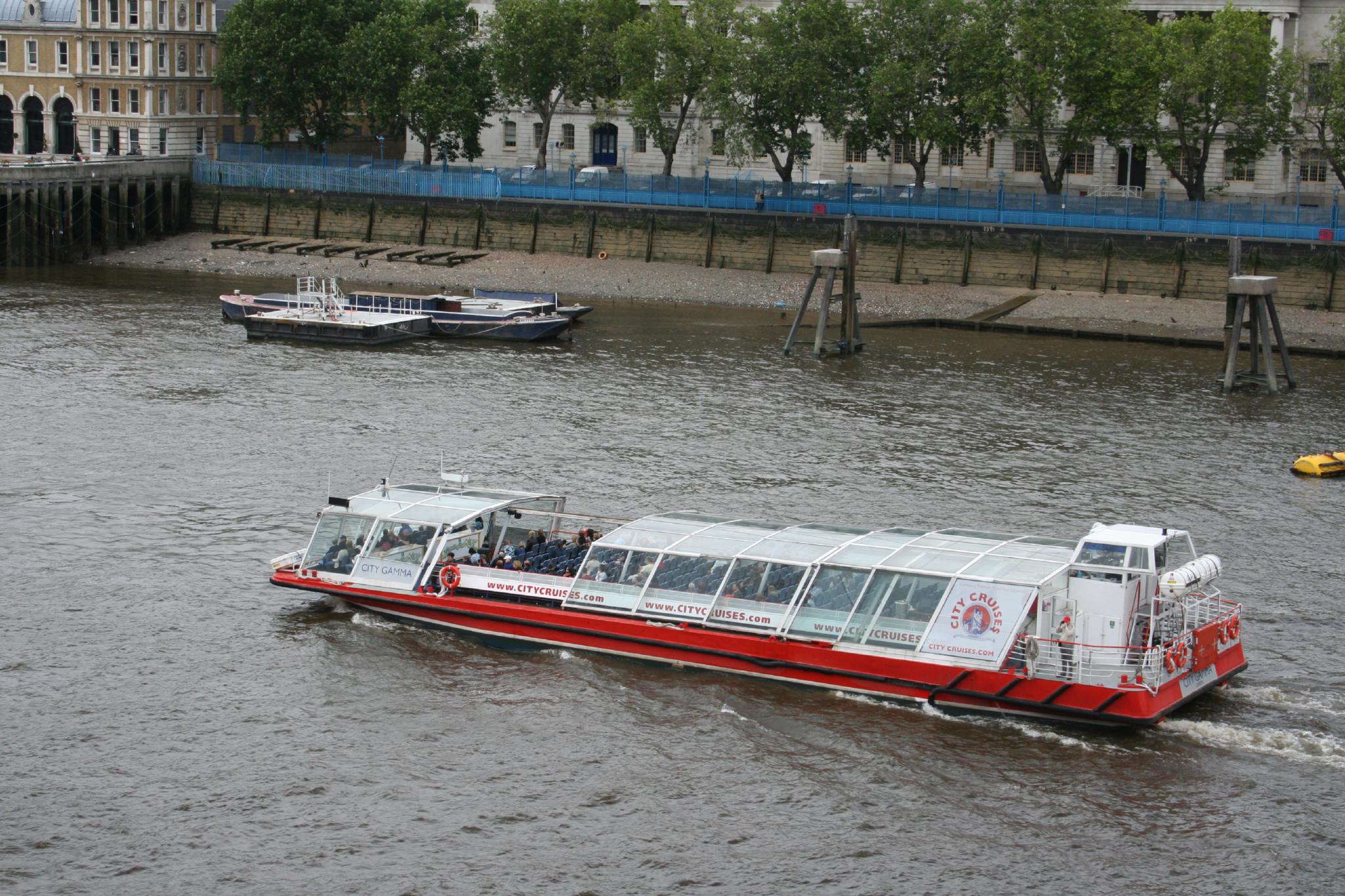 With the River Thames flowing through the heart of London it's no surprise the river is a popular way to move through the city.
The Riverboat service is operated by Uber Boats, Thames Clippers and they cover 20 stops between Putney and Barking Riverside, with more frequent trips between Westminster and Tower. The service operates across three zones West, Central and East and prices are based on the zones travelled in. The Central Zone covers Battersea Power Station to Canary Wharf and the areas beyond comprise the West and East Zones respectively.
A day pass is available covering the entire network Adult price 27.90 (£23.65 if booked more than 7 days in advance), Concession or Child £13.95 (£11.85)
Single journeys in one zone vary from Adult £6-60 Concessions / Child £3.10 in the outer zones and Adult £9.90 Concessions / Child £4.95 in the central zone. To Cross two zones it is £11.40 / £5.70 and to use three zones it is £19.30 / £9.65. Return fares are double the single fares. Holders of TfL Travelcards receive a discount of up to 1/3
For a more leisurely cruise you can sail from Westminster Pier to Kew, Richmond and Hampton Court. Dates and times vary as the service is reliant on tides and the journey from Westminster takes between 3 and 3.5 hours to Hampton Court, 2 hours to Richmond and 1.5 hours to Kew. Single fares from Westminster to Hampton Court are Adult £27.00 single / £36.00 return, Concessions £21.00 / £30.00 and Child £13.50 / £18.00. Personally I think it's better just to get the boat one way and the train the other way because if you get a return you will not get long at Hampton Court, unless it's one of the very rare days when there is more than one ferry running.
For something a bit more special some companies operate cruise and dine trips. Lunch cruises (1 hr 45 mins) are available from around £43.00, afternoon tea cruises (1hr 30 min) from around £53.00 and dinner cruises (2-3 hours) from £42.00
London Cable Car
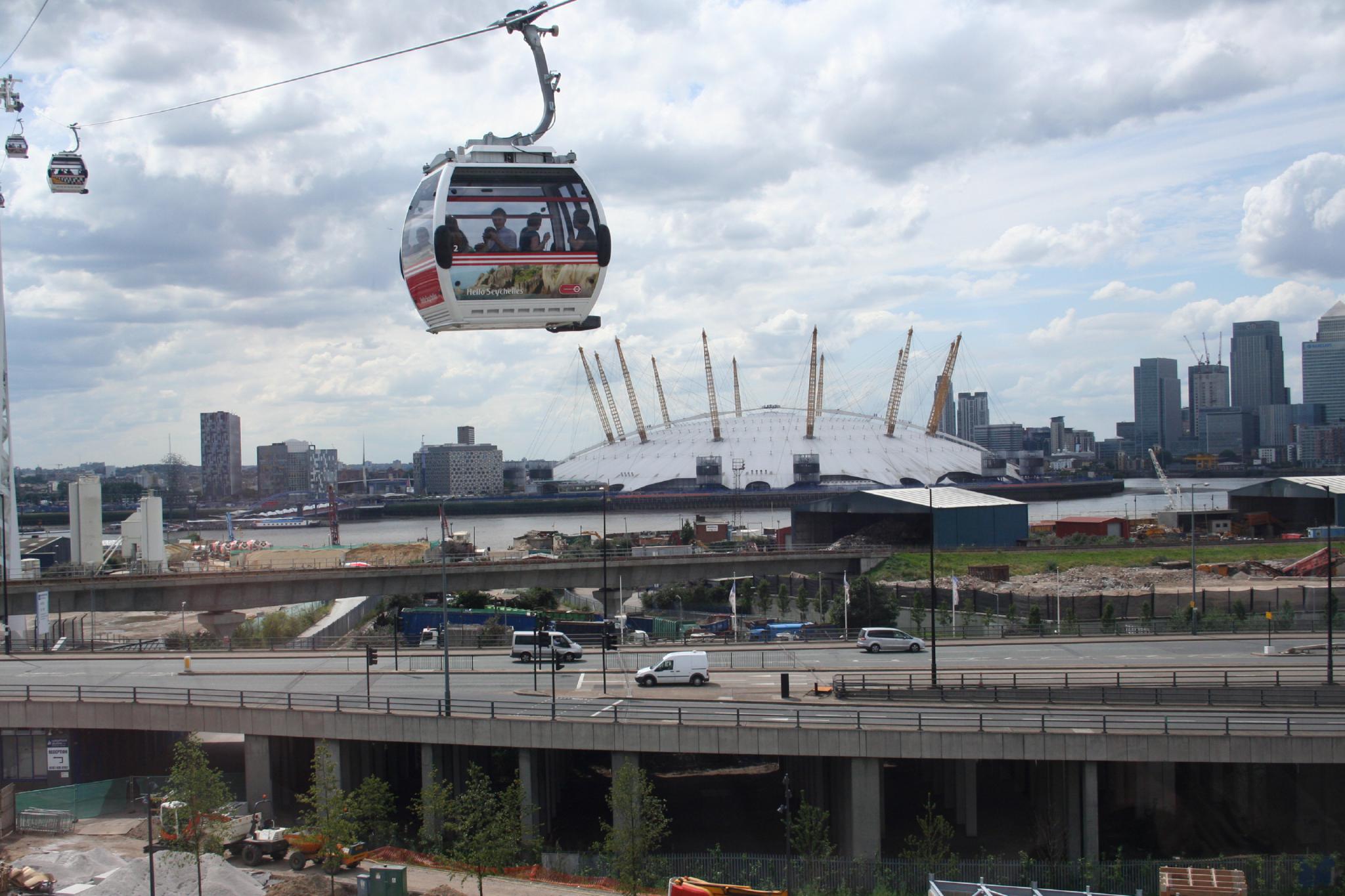 Location: Greenwich Peninsula and Royal Docks
Tube: North Greenwich
DLR: Royal Docks
River: North Greenwich
Hours: Mon - Thurs 08:00 - 21:00, Friday 09:00 - 22:00, Saturday 09:00 - 23:00, Sunday / Bank Holidays 09:00 - 21 :00
Frequency: Every 30 seconds
Crossing Time: up to 10 mins (cable cars run faster during busy periods)
Cost: Single Adult £7.00 Child £3.50, Return £13.50 / £6.75
The London Cable car soars high above the River Thames linking Greenwich Peninsula and the Royal Docks and the ride offers great views of the Greenwich Peninsular, Thames Barrier, Canary Wharf and the Olympic Park.
The service will be suspended in high winds or if there is a threat of lightning. The gondola may stop mid-journey to facilitate the loading and unloading of wheelchair passengers.
Each gondola carries up to ten passengers, during quieter periods you should be able to get exclusive use for your party but at peak times you will have to share.
As well as standard fares, special trips like gin or Champagne trips are available, there's even a glass bottom experience, all priced around the £25.00 mark.
Trams
Most major, and many smaller, cities have extensive tram networks, however due to the layout of central London a tram service is not logistically viable.
However, in outer London such a service is more practicable.
The only current tram network is in south London, centred on Croydon, with services to Wimbledon, New Addington Beckenham and Elmers End.
Open Top Bus Tours
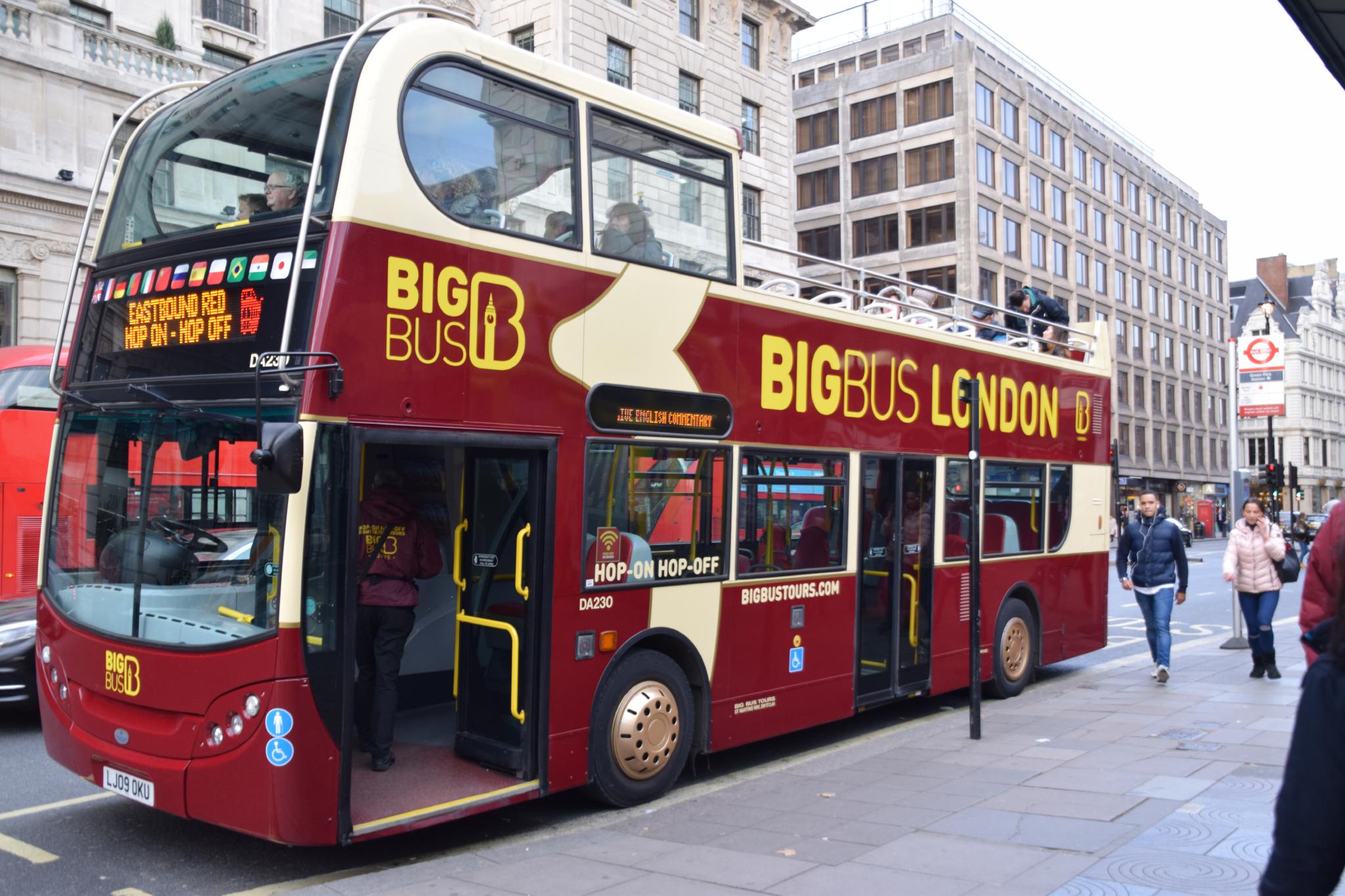
Visit any city almost anywhere in the world and you will encounter the, usually red, open top sightseeing buses, with hop on, hop off tours..
There are multiple options for such tours in London, all operated by private companies and outside the auspices of TfL.
There are pros and cons to these services. The big pro, especially for a newcomer to a city, is they show you almost all the major attractions , with either a recorded or live commentary. They are an excellent way to familiarise yourself with a city, and are also useful if you only have a short time and are also a good option if you are unsure about using public transport.
The cons are, they are unpleasant if it's a rainy day (not uncommon in London) plus they are quite expensive. Adult prices range from £32.00 - £49.00 for a one day pass*, £46.00 - £60.00 for a two day pass*, child prices are £19.00 - £30.00 (day pass) and £27.00 - £36.00 (two day)
Also look for included extras, most tickes will include a free, one way river trip, whilst some will also include free walking tours as well.
* Be careful when buying passes, some are better value than others some operators issue tickets for one or two calendar days, whilst others are valid for 24 / 48 hours from when issued, so used carefully a 48 hour ticket could be used over three calendar days. For example buy a 48 hour ticket at midday on day one, it won't expire until 11:59 on day three, giving you one full and two half days use.
As well as the "standard" bus tours there are some more specialist tours available, including afternoon tea tours, London by night tours.
Return to London Home Page