
La Palma
Now here is a Canary Island I have a great deal of time for. La Palma is sometimes rather unfairly overlooked in favour of Tenerife, Gran Canaria and Lanzarote, but that is precisely what makes it so appealing. If you are looking for endless hotel complexes, water parks and rows of British pubs, there are better places to go. If you want spectacular scenery, beautiful villages, peace and quiet and an island that still feels genuinely Spanish, La Palma is difficult to beat.
Known as La Isla Bonita – the Beautiful Island, La Palma certainly has a strong claim to the title. It is volcanic, mountainous and extraordinarily green, with deep ravines, pine forests, banana plantations and dramatic cliffs. In places the scenery is almost ridiculously spectacular.
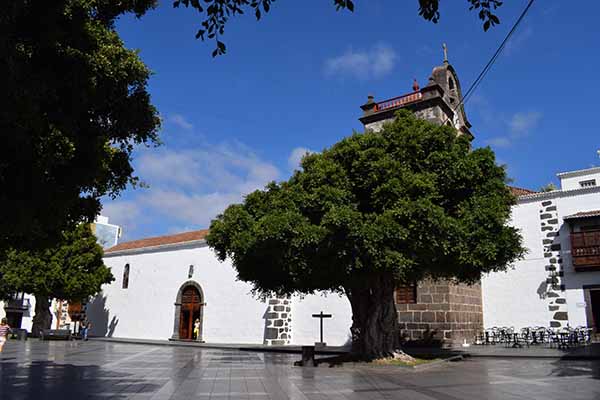
 The capital, Santa Cruz de la Palma, is a splendid introduction to the island. It is a proper Canarian town rather than a purpose-built tourist resort, with attractive old buildings, cobbled streets and the famous wooden balconies that have become one of La Palma's trademarks. The waterfront is pleasant and the historic centre is easily explored on foot.
Santa Cruz is not enormous, but that is part of its charm. You can wander around without feeling that you have to tick off twenty different attractions before lunchtime. Stop for a coffee, watch the locals go about their business and enjoy the architecture. This is a place where taking your time is rather more important than taking photographs.
One of the island's most famous sights is the Caldera de Taburiente, an enormous volcanic crater forming the heart of the island. It is surrounded by mountains and covered in pine forest, and the scale of the landscape is astonishing. There are numerous walking routes into and around the caldera, ranging from relatively straightforward excursions to considerably more demanding hikes.
 La Palma is particularly attractive to walkers. The island has a network of trails taking you through forests, across volcanic landscapes and along mountain ridges. You can go from lush green vegetation to almost lunar scenery within a surprisingly short distance.
And that volcanic activity is very much part of La Palma's story. The island's landscape has been repeatedly reshaped by eruptions, most recently with the 2021 eruption of Cumbre Vieja, which dramatically altered parts of the west and south of the island. The resulting lava fields are a stark reminder that these islands are still geologically active rather than simply ancient lumps of rock sitting quietly in the Atlantic.
 One of the best-known volcanic landscapes is around Volcán de San Antonio and Teneguía, where you can walk through terrain that looks more like another planet than a holiday island. The contrast between the black volcanic rock and the blue Atlantic is particularly striking.
Another reason La Palma has such a reputation is its extraordinary night sky. The island's high mountains and relatively low levels of light pollution provide some of the best conditions for stargazing in Europe. The Roque de los Muchachos Observatory, high in the mountains, is home to some of the world's most important astronomical telescopes. Even if astronomy isn't your particular passion, standing beneath a properly dark sky on La Palma can be an unforgettable experience.
The drive up towards Roque de los Muchachos is an adventure in itself. The roads wind through forests and eventually emerge above the clouds, with spectacular views across the island. On a clear day the scenery is breathtaking.
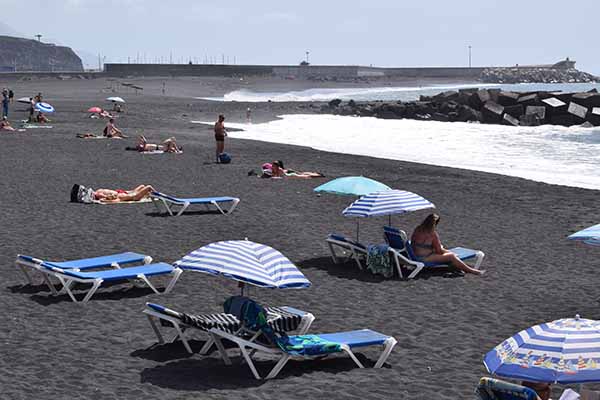 The west coast is where you really begin to appreciate the island's volcanic nature. Puerto Naos was traditionally one of La Palma's principal seaside resorts, although the 2021 volcanic eruption had a major impact on the surrounding area. Further north, Tazacorte is an attractive coastal town surrounded by banana plantations and steep hillsides.
Bananas are a major part of La Palma's agricultural landscape. You will see plantations covering slopes that, at first glance, appear far too steep for farming. The island's fertile volcanic soil and mild climate make it particularly suitable for growing them.
The north of La Palma is perhaps my favourite part because it feels wonderfully remote. The roads become narrower, the villages smaller and the scenery increasingly dramatic. Los Tilos is an especially beautiful area, with lush vegetation and ancient laurel forests. It is a world away from the dry, heavily developed image that some people have of the Canary Islands.
The Ruta de los Volcanes, or Route of the Volcanoes, provides another spectacular journey across the island. The landscape is dominated by volcanic cones, lava fields and pine forest, and it is one of the finest ways of appreciating just how extraordinary La Palma's geology really is.
There are beaches, although La Palma is not really a traditional beach-holiday destination. Most are volcanic, meaning dark or black sand rather than the golden beaches found elsewhere. Some are tiny and tucked beneath cliffs, while others have been developed with the necessary facilities. They are perfectly pleasant, but the island's real attraction is the landscape rather than lying horizontally beside the sea for two weeks.
 And that brings us to the great advantage of La Palma: it has not been overdeveloped.
There are tourist facilities, hotels and restaurants, but they generally sit within the existing landscape rather than attempting to replace it. You don't get the endless rows of high-rise apartments that dominate parts of Tenerife and Gran Canaria. You don't get enormous purpose-built resorts stretching for miles. Instead, tourism is much more integrated into the island.
It also means that hiring a car is almost essential if you want to see the best of La Palma. Public transport exists, but the island's greatest sights are scattered around the mountains and countryside. Driving can be an adventure, particularly on some of the smaller roads, but that is half the fun.
Food is another pleasure. Local restaurants serve traditional Canarian dishes, fresh fish, goat's cheese, potatoes with mojo sauce and, naturally, plenty of locally grown produce. The food is generally straightforward rather than pretentious, which suits the island perfectly.
 The people also seem to have retained that relaxed Canarian approach to life. There is none of the frantic urgency you sometimes encounter in major tourist centres. La Palma encourages you to slow down, sit outside with a drink and watch the world go by.
There is, however, a warning. La Palma is not for everyone. If your idea of a holiday involves a huge sandy beach, non-stop nightlife and entertainment on your doorstep, you may find it too quiet. The mountainous terrain also means that getting around can take considerably longer than you might expect from looking at a map.
For everyone else, that quietness is precisely the attraction.
Old Moaner verdict: La Palma is my sort of Canary Island. Beautiful, relatively unspoilt and blessed with scenery that can compete with almost anywhere in Europe. It has volcanoes, forests, mountains, villages, banana plantations, spectacular coastal scenery and some of the finest stargazing you are likely to find. Most importantly, it hasn't allowed mass tourism to completely take over. If you want a Canary Island that still feels like a real place rather than one enormous holiday resort, put La Palma near the top of the list. It really is a hidden gem — and long may it remain that way.
Return to Canary Islands Home Page