
Lanzarote
Now we come to the Canary Island that, for me, is rather less Isla Bonita and rather more Lanza Grotty. Lanzarote is undoubtedly popular, and millions of people clearly love it, but I have never quite understood the attraction. There are some genuinely spectacular sights, but for me they are surrounded by an island that can feel stark, barren and overdeveloped in all the wrong places.
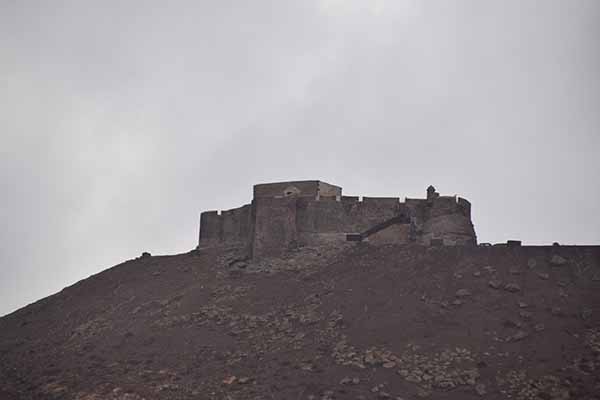 The island's greatest asset is undoubtedly its volcanic landscape. The Timanfaya National Park is extraordinary, with mile after mile of black, red and ochre volcanic terrain that looks more like Mars than somewhere in the Atlantic. The eruptions of the eighteenth century transformed a huge part of Lanzarote, burying villages and farmland beneath lava. Today, the landscape is protected and is one of the island's major attractions.
There is no denying that Timanfaya is impressive. The volcanic cones and lava fields stretch as far as the eye can see, and demonstrations showing just how close the heat remains beneath the surface are particularly entertaining. Unfortunately, the main tourist experience is rather regimented, with coach tours following designated routes rather than allowing you to wander freely through the landscape.
Lanzarote's most famous son was the artist and architect César Manrique, and his influence is impossible to escape. Manrique was passionate about protecting the island from the sort of uncontrolled development that has blighted other tourist destinations. He encouraged architecture that worked with the landscape rather than fighting against it, and many of his creations are now major attractions.
 The Jameos del Agua, created within a series of volcanic caves, is probably the best example. Manrique transformed part of the lava tunnel into an extraordinary complex containing a pool, gardens, restaurant and auditorium. It is clever, imaginative and unlike anything you are likely to find elsewhere.
Then there is the Mirador del Río, perched dramatically high above the north coast. The views across to the island of La Graciosa are magnificent, and the building itself demonstrates Manrique's ability to make architecture blend into the landscape.
The trouble is that while Manrique did his best to protect Lanzarote, tourism eventually won the argument in many places.
 Puerto del Carmen is the obvious example. What was once a small fishing village has become one of the island's principal tourist resorts, packed with hotels, apartments, restaurants, bars and shops. The long seafront promenade is pleasant enough, and there are several decent beaches, but the overall impression is of somewhere that has been built primarily for tourists rather than somewhere tourists happen to visit.
Playa Blanca has followed much the same path. It has grown enormously and continues to expand, with plenty of accommodation, restaurants and holiday facilities. Again, if you want a straightforward package holiday with guaranteed sunshine, it ticks the boxes. But it isn't exactly an architectural masterpiece.
And then there is Costa Teguise, another purpose-built resort that provides much the same combination of hotels, apartments, beaches and restaurants. There is nothing particularly wrong with it, but nothing particularly memorable either.
Perhaps the biggest problem with Lanzarote is the landscape outside the volcanic areas. There are vast stretches of bare, dusty terrain, and the island can look positively unfinished. Some people will tell you this is its charm; personally, I am not convinced. Give me the lush green mountains of La Palma any day.
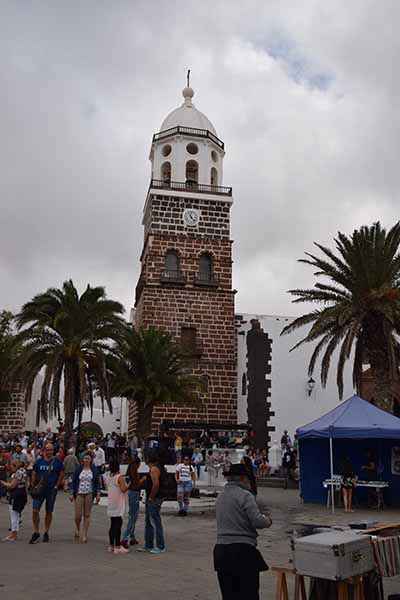 The island does have some attractive towns and villages, however. Teguise, the former capital, is particularly worthwhile. Its historic centre contains whitewashed buildings, narrow streets and attractive squares, and the contrast with the modern resorts is considerable. On market days it becomes extremely busy, but visit outside the main tourist rush and it is much more enjoyable.
Haría, in the north, is another pleasant surprise. Known for its palm trees and traditional white houses, it sits in a greenish valley surrounded by volcanic hills and feels considerably more authentic than the major resorts.
Lanzarote's beaches are another mixed bag. There are some very attractive stretches of sand, including the beaches around Papagayo in the south. These small coves have clear water and beautiful scenery and are probably among the best beaches on the island. Getting there, however, can involve travelling along some rather rough tracks, which is perhaps Lanzarote's way of making sure you have earned your swim.
Offshore is La Graciosa, a small island reached by ferry from Órzola. It is considerably less developed and offers a taste of what the Canary Islands might have been like before mass tourism arrived. If Lanzarote itself is becoming too much for you, La Graciosa is an excellent escape.
The island's wine industry is another curiosity. Around La Geria, vines are grown in individual volcanic pits, protected from the wind by semicircular stone walls. It is an ingenious agricultural technique and produces surprisingly good wine from a landscape that appears completely incapable of supporting anything other than volcanic rock.
Lanzarote also has plenty of activities for those who like getting out and about. Cycling, walking, diving and surfing are all popular, and the island's combination of wind, waves and volcanic terrain makes it particularly attractive to outdoor enthusiasts.
The climate is, naturally, excellent. Sunshine is almost guaranteed, rainfall is limited and temperatures are generally pleasant throughout the year. The downside is the wind, which can sometimes be surprisingly strong. Lanzarote isn't called the windy island for nothing.
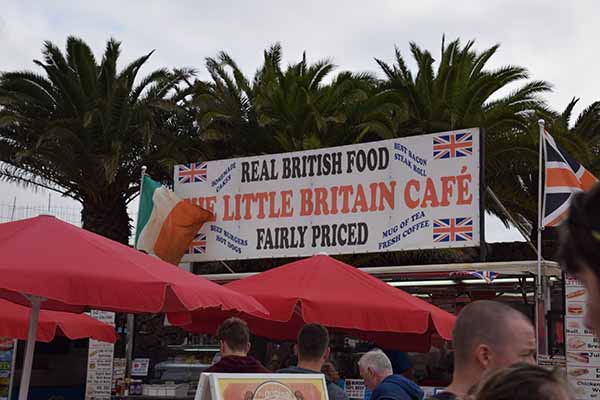 There is also an undeniable sameness to the tourist areas. Once you've seen one row of white apartments, swimming pools, British pubs and souvenir shops, another row doesn't necessarily add much to the experience. You can quite easily spend a fortnight here without seeing anything beyond your hotel, the beach and the nearest bar — although whether that's Lanzarote's fault or the holidaymaker's is another matter.
And yet, despite all my moaning, I have to admit Lanzarote has some genuine highlights. Timanfaya is spectacular, Manrique's work is fascinating, La Geria is unique and the northern part of the island is considerably more attractive than the resort areas suggest.
It is therefore a case of two Lanzarotes. There is the Lanzarote of volcanic landscapes, traditional villages and clever architecture, and then there is the Lanzarote of package holidays, endless apartments and tourist tat.
Old Moaner verdict: Lanzarote is not my favourite Canary Island, and I suspect the nickname Lanza Grotty says rather a lot about my feelings towards it. But even an Old Moaner has to acknowledge that there are some remarkable sights here. Timanfaya is spectacular, César Manrique's legacy is genuinely impressive and the island has some beautiful corners if you make the effort to find them. Just don't expect me to swap La Palma for it anytime soon. Give me green mountains, traditional villages and spectacular scenery over a sea of holiday apartments every time.
Return to Canary Islands Home Page